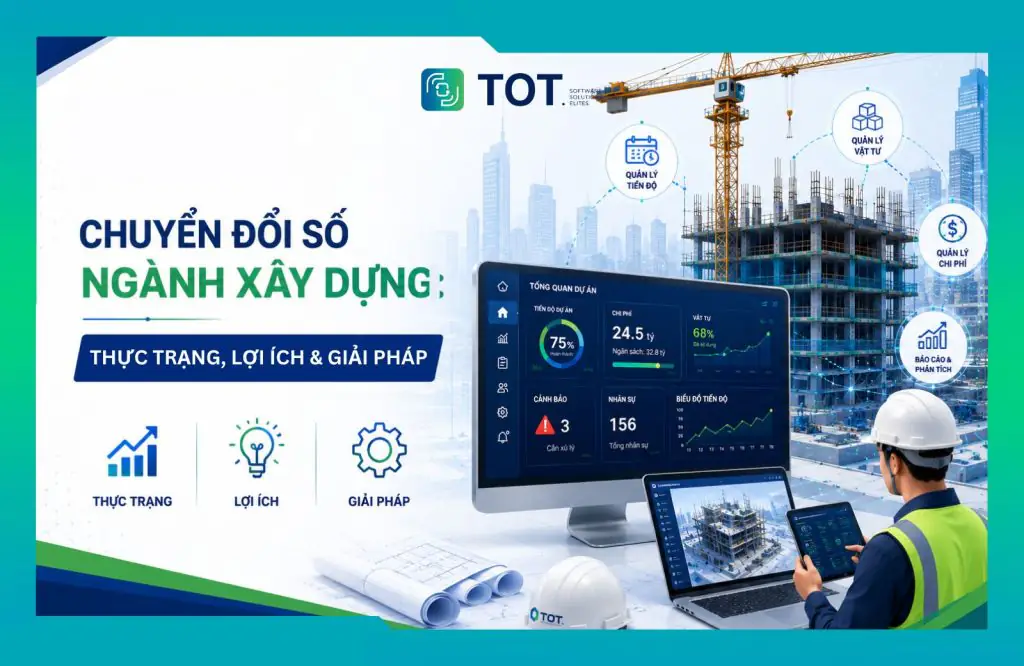
Digital transformation in the construction industry is a trend that helps businesses digitize processes, centralize data management, and improve operational efficiency. Amid mounting pressure on timelines, costs, and quality, applying technologies such as AI, BIM, IoT, and Cloud Computing is becoming a competitive advantage for many construction companies. In the article below, TOT will walk you through the current state of the construction industry, the benefits of digital transformation in construction, the standout technologies, and the challenges along with suitable implementation solutions.
>>> See also:
- Top 15 most popular car garage management software options in 2026
- AI customer recognition at showrooms solutions for 2026
- What is a CRM for car showrooms? A comprehensive customer management solution
What is digital transformation in the construction industry?
Digital transformation in the construction industry is the process of applying digital technology to digitize, automate, and optimize activities from design and construction to project management and building operations. The goal is to build a centralized management system, connect data across departments, and support fast, accurate decision-making.
Unlike simply converting paper records into electronic data, digital transformation also changes the way a business operates. Data is updated in real time, processes are standardized, and many manual tasks are automated, which helps reduce errors and improve management efficiency.
Today, construction companies are applying many technologies such as BIM, AI, IoT, Big Data, and Cloud Computing to manage progress, control costs, monitor construction sites, and optimize resources. Depending on their scale and needs, businesses can choose to deploy each technology individually or build an integrated management software system to carry out digital transformation effectively, step by step.
>>> Read more:
- What are Vision AI Agents? How to build Vision AI Agents with Roboflow
- The best locally run vision language models for offline AI
The current state of the construction industry
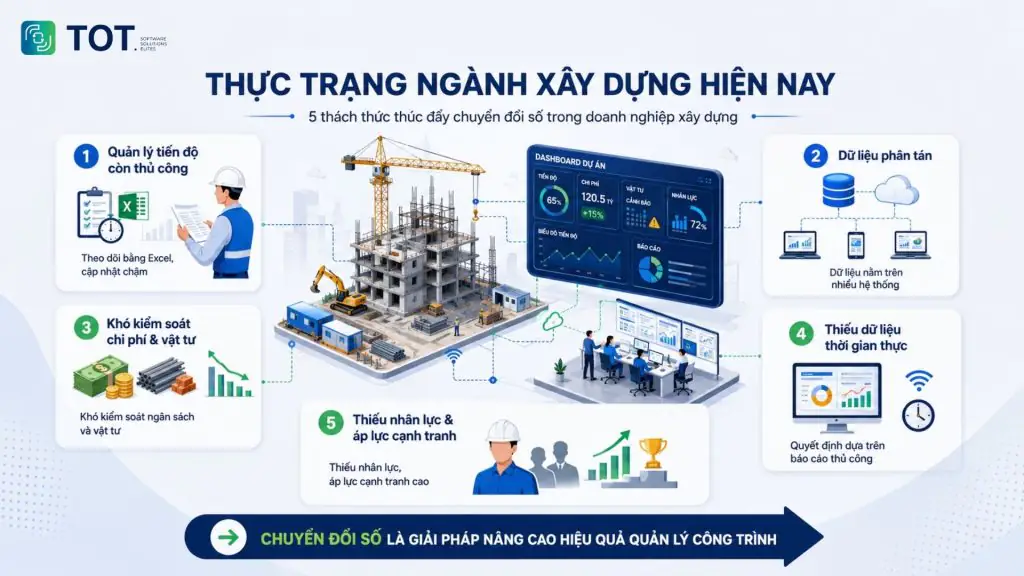
The construction industry is facing many challenges in project management and operations as demands for timelines, quality, and cost keep rising. Below are five common problems that are pushing many businesses to accelerate digital transformation in order to improve management efficiency and competitiveness:
- Progress is still managed manually: Many businesses still track progress using Excel or paper reports, which makes information slow to update and makes it hard to spot delayed items early.
- Data scattered between the site and the office: Records, drawings, materials, and progress are often stored across many different platforms, which wastes time consolidating them and easily leads to data discrepancies.
- Difficulty controlling costs and materials: Budgets, construction volumes, and material inventory are tracked separately rather than in sync, making it hard for businesses to control costs and increasing the risk of losses and unplanned expenses.
- Lack of real-time data: Management decisions are often based on periodic reports rather than continuously updated data, which reduces the ability to respond to changes happening on-site.
- Labor shortages and competitive pressure: Businesses must cope with a shortage of skilled personnel while also improving productivity, cutting costs, and meeting the increasingly high demands of investors.
These challenges show that the traditional management model can no longer meet the requirements of modern projects. This is also why more and more businesses are choosing digital transformation in the construction industry to improve construction progress management, optimize operations, and strengthen their long-term competitiveness.
Benefits of digital transformation in the construction industry
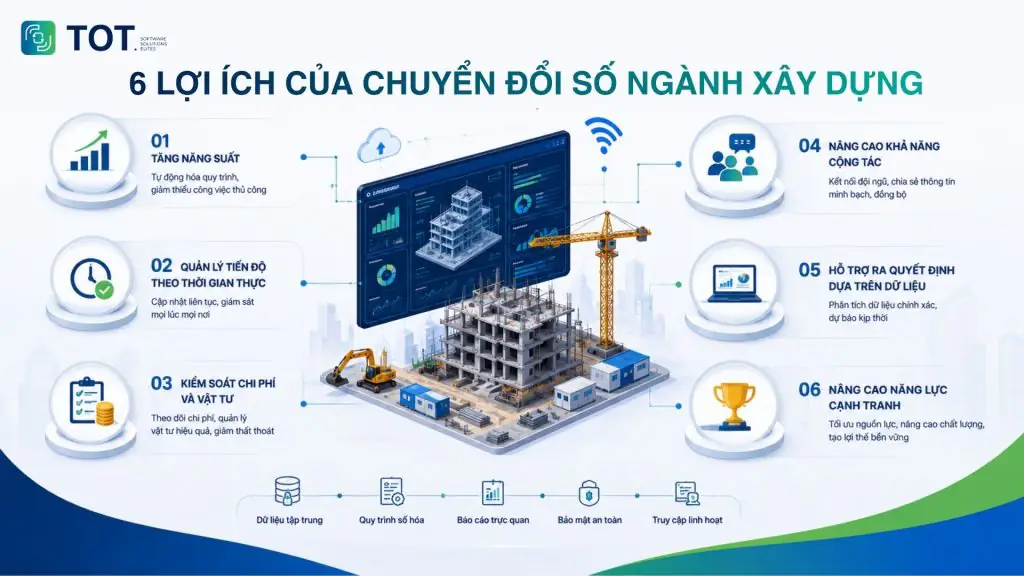
Digital transformation in the construction industry helps businesses optimize management processes, improve operational efficiency, and boost competitiveness in an increasingly demanding market. When data is digitized and connected on a unified platform, businesses can control projects better, reduce errors, and make quick decisions based on real data.
Increasing productivity and operational efficiency
Digital transformation helps automate many tasks such as assigning work, updating progress, managing records, and consolidating reports. By reducing manual operations and limiting repetitive data entry, staff can focus on higher-value work. At the same time, standardized workflows also help businesses save time and improve operational efficiency.
Real-time progress management
Instead of waiting for end-of-day reports or manual updates, businesses can track construction progress in real time through software and mobile devices. Every change on-site is synchronized to the system immediately, helping managers quickly detect delayed items and take timely corrective action.
Controlling costs and materials
Digitizing data helps businesses track budgets, construction volumes, and material status within a single system. Expenses exceeding the plan or the risk of material shortages can be flagged early, helping businesses control costs effectively and limit losses during project execution.
Improving collaboration between stakeholders
Digital platforms improve collaboration by bringing investors, contractors, consultants, and supervisors into the same workspace. Every party accesses the same version of drawings, records, and progress, avoiding situations where people work on outdated data. Combined with a CRM for construction companies, businesses can also manage relationships with investors and partners throughout the project lifecycle.
Supporting data-driven decision-making
Modern management systems can consolidate data on progress, costs, personnel, and project performance into visual reports. Instead of making decisions based on experience or manual reports, businesses can analyze data in real time to assess the situation and choose more suitable options.
Strengthening competitiveness
Businesses that apply digital transformation can execute projects more efficiently, optimize costs, and improve service quality. Transparent management, fast responses, and the ability to meet investors’ requirements also build reputation, giving businesses a competitive edge and preparing them to take on large-scale projects.
>>> Read more:
- 18 highly effective ways to apply AI for ecommerce
- Build a sales website with AI for free, SEO-friendly, and highly effective
Technologies applied in digital transformation of the construction industry
Digital technologies play a foundational role in the digital transformation of the construction industry, helping businesses manage projects efficiently, automate processes, and exploit data better. Depending on their needs and scale, businesses can combine multiple technologies to optimize operations from design and construction to building operations.
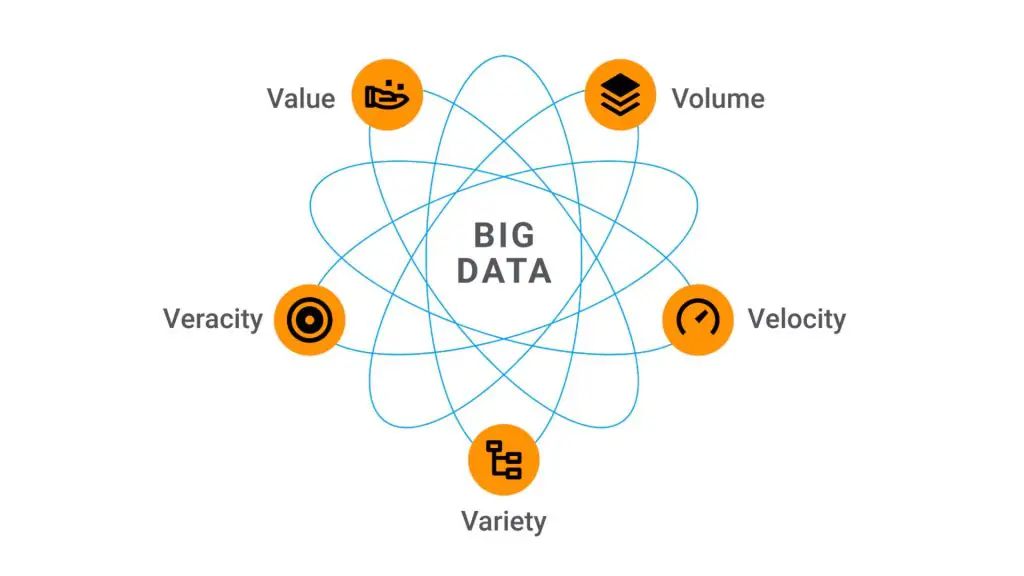
Big Data
Big Data is a technology for collecting and analyzing large volumes of data from many different sources, such as construction progress, costs, materials, personnel, and equipment. Because it processes data quickly, Big Data lets businesses detect trends, evaluate project performance, and make more accurate decisions.
In the construction industry, Big Data is applied to analyze costs, forecast progress, optimize resources, and evaluate construction performance. This helps managers reduce risks and improve project management efficiency.
AI & Machine Learning
AI and Machine Learning help systems automatically analyze data, recognize trends, and support predictions based on the information collected. This is one of the technologies driving automation in the construction industry.
Businesses can apply AI to forecast progress, detect risks, monitor occupational safety using AI Computer Vision, or analyze data to support decision-making. This helps improve management efficiency and reduce manual work.
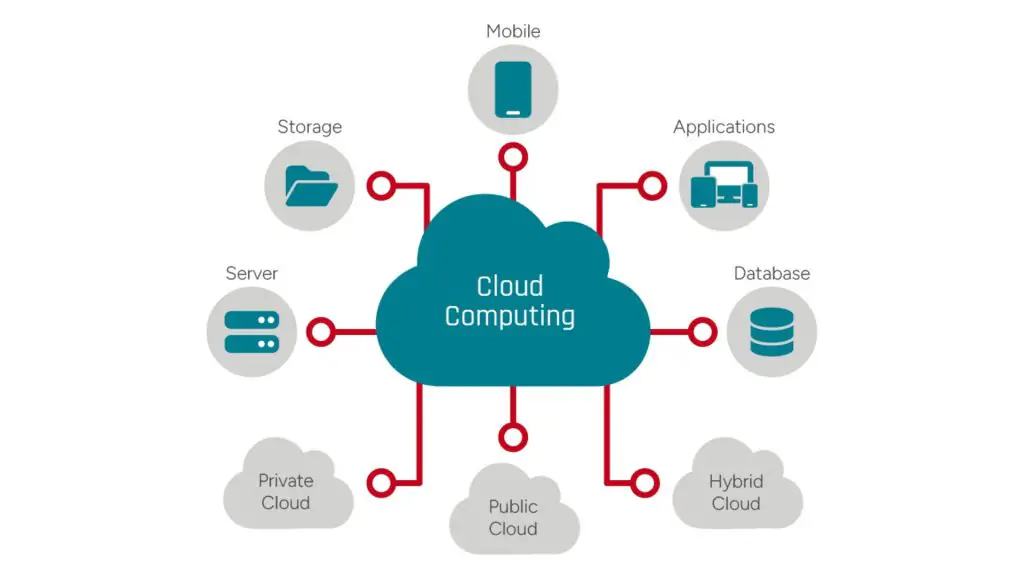
Cloud Computing
Cloud Computing allows data to be stored and shared on the same online platform, helping stakeholders access information anytime, anywhere without depending on an internal server.
For construction businesses, cloud computing supports the synchronization of project records, drawings, contracts, and reports between the site and the office. As a result, departments coordinate faster and the risk of lost or inconsistent data is reduced.
IoT (Internet of Things)
IoT (Internet of Things) is a network of devices connected to the Internet to collect and transmit data in real time. In construction, IoT sensors and devices help businesses continuously monitor the condition of buildings, machinery, and the construction environment.
Thanks to real-time data updates, managers can control equipment, monitor working conditions, and quickly detect incidents to take appropriate action.
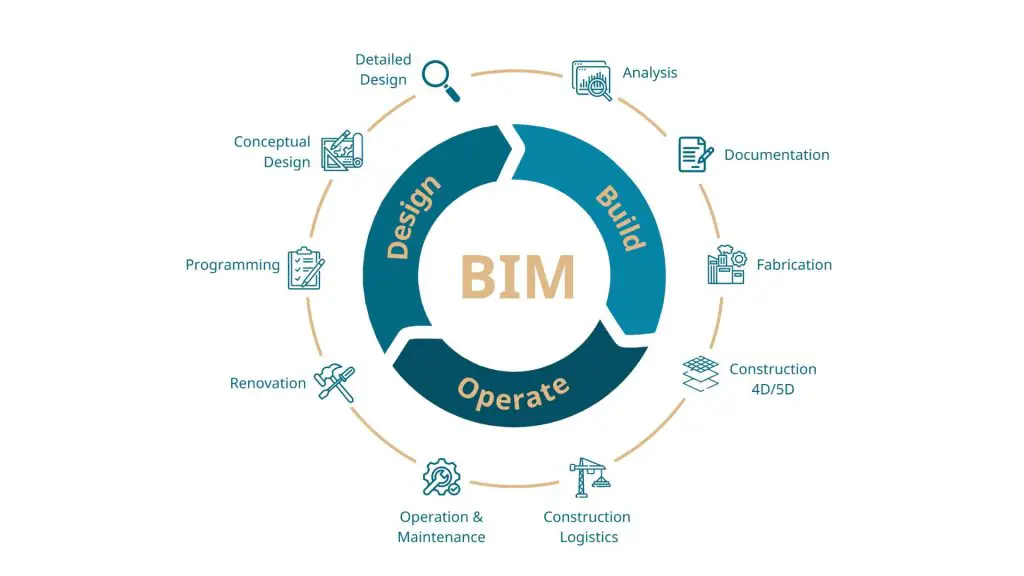
BIM (Building Information Modeling)
BIM (Building Information Modeling) is a technology that creates a digital model integrating all information about a building throughout the project lifecycle. Beyond simulating the 3D design, BIM also manages data on structure, materials, progress, and costs.
Applying BIM helps stakeholders coordinate effectively from the design stage, limits technical conflicts, reduces construction errors, and optimizes project management.
Challenges in implementing digital transformation in the construction industry
Although it brings many benefits, the process of digital transformation in the construction industry also comes with its share of challenges. To implement it effectively, businesses need to prepare in terms of budget, technology, and personnel, and build a roadmap suited to their current operations.
- High initial investment costs: Implementing digital transformation requires investment in software, technology infrastructure, and staff training, which puts pressure on many businesses, especially small and medium-sized ones. To optimize costs, businesses should implement it in phases and prioritize digitizing core processes first.
- Shortage of digitally skilled personnel: Many businesses do not yet have a team proficient in software and digital technology, so implementation falls short of the expected results. Training staff and building a culture ready for change will help businesses quickly adapt to the new operating model.
- Difficulty integrating with legacy systems: Many businesses are simultaneously using multiple separate pieces of software or management processes. Connecting a new system with an existing construction ERP, CRM, or accounting software can be difficult if the data has not been standardized. Therefore, businesses should prioritize solutions with flexible integration capabilities to ensure data is synchronized and operations are not interrupted.
- Changing processes and corporate culture: Digital transformation is not only about applying technology but also about changing the way a business operates. If staff are not ready or do not clearly understand the benefits of the new system, the implementation process can face many obstacles. Therefore, businesses need to combine training, internal communication, and support from leadership to drive the transformation.
- Data security and governance: When data is digitized and stored on online platforms, businesses need to focus on access control, backup, and information security. This not only helps reduce the risk of data leaks but also ensures the system operates stably and safely.
>>> See also:
- Top 20 most reputable and professional app design companies
- What is application software? Common types of application software
Top 5 construction management software solutions to support digital transformation
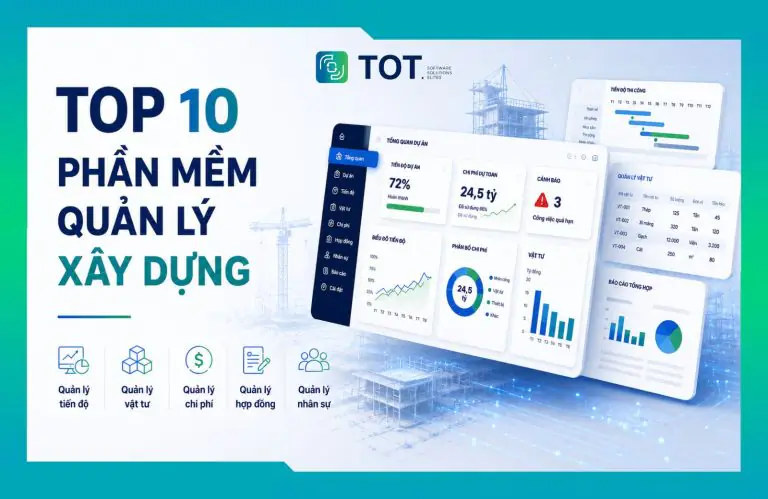
Construction management software is a tool that helps businesses digitize processes, centralize data management, and improve operational efficiency. Below are five popular construction management software options, including both domestic and international solutions, suited to businesses of different sizes:
| Software | Best suited for | Highlights |
| MISA AMIS | Medium and large enterprises | End-to-end governance, ERP integration |
| Procore | Contractors, large-scale projects | Cloud-based project management |
| BRAVO ERP | Businesses needing process-based ERP | Managing finance, materials, and projects |
| FastCons | Construction contractors | Managing progress, costs, and materials |
| IBOM | Small and medium-sized enterprises | Managing sites, personnel, and equipment |
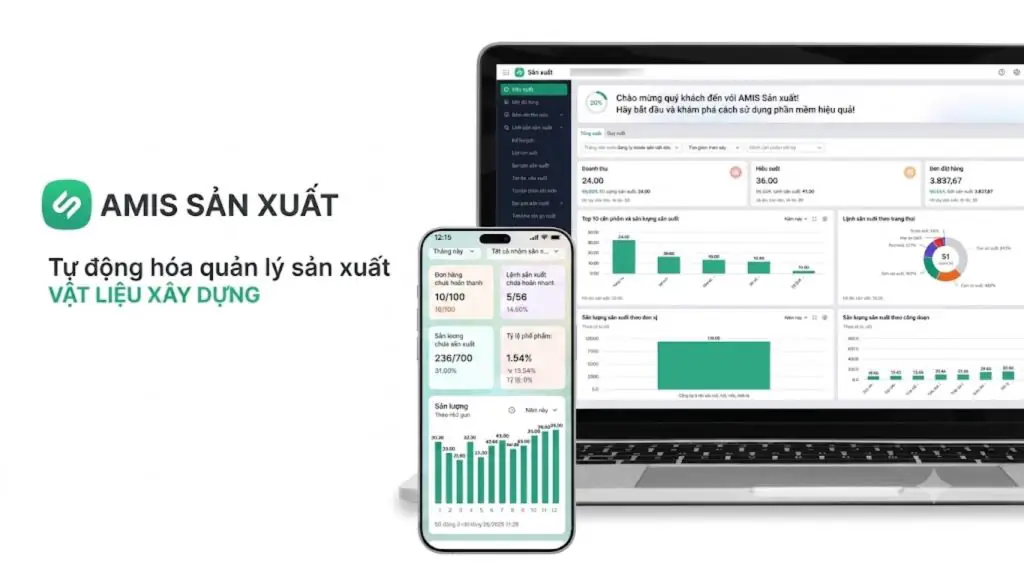
1. MISA AMIS construction management software
MISA AMIS is a business management platform developed by MISA, offering many modules that support financial, HR, accounting, and project management. For construction businesses, the software helps manage progress, costs, and centralized data while easily connecting to a construction ERP system.
Pros
- A comprehensive management ecosystem.
- Easy to use, well suited to Vietnamese businesses.
- Connects with many management modules.
Cons: Some advanced features need to be deployed based on specific requirements.
Best suited for: Medium and large enterprises looking for an end-to-end management solution.
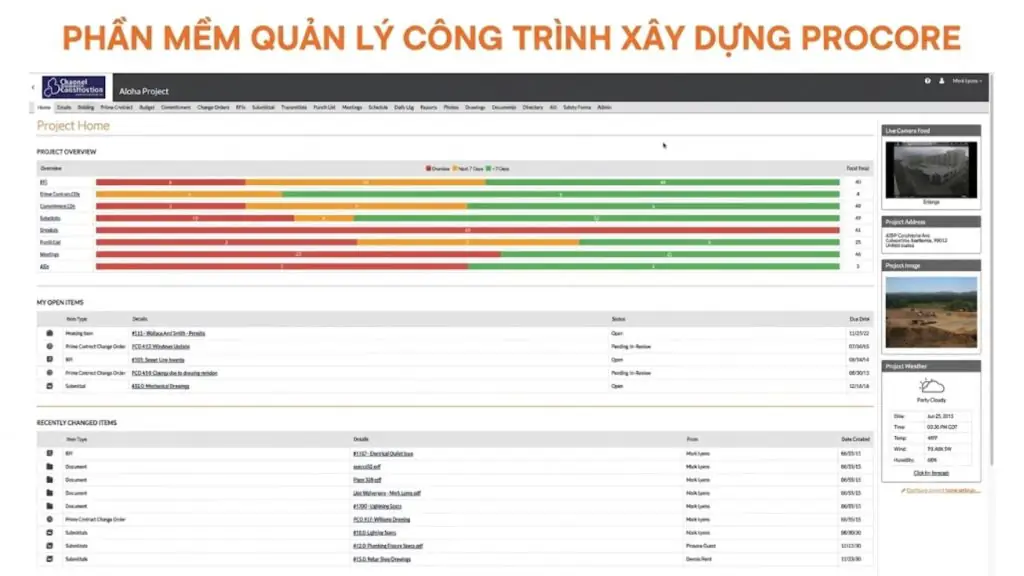
2. Procore construction management software
Procore is cloud-based construction management software used by many international businesses. The solution supports managing the entire project lifecycle, from planning and document management to progress tracking and real-time collaboration between stakeholders.
Pros
- Centralized project management.
- Supports remote work.
- Ability to integrate with many platforms.
Cons
- High implementation costs.
- The interface and documentation are mainly in English.
Best suited for: Contractors and businesses executing large-scale projects.
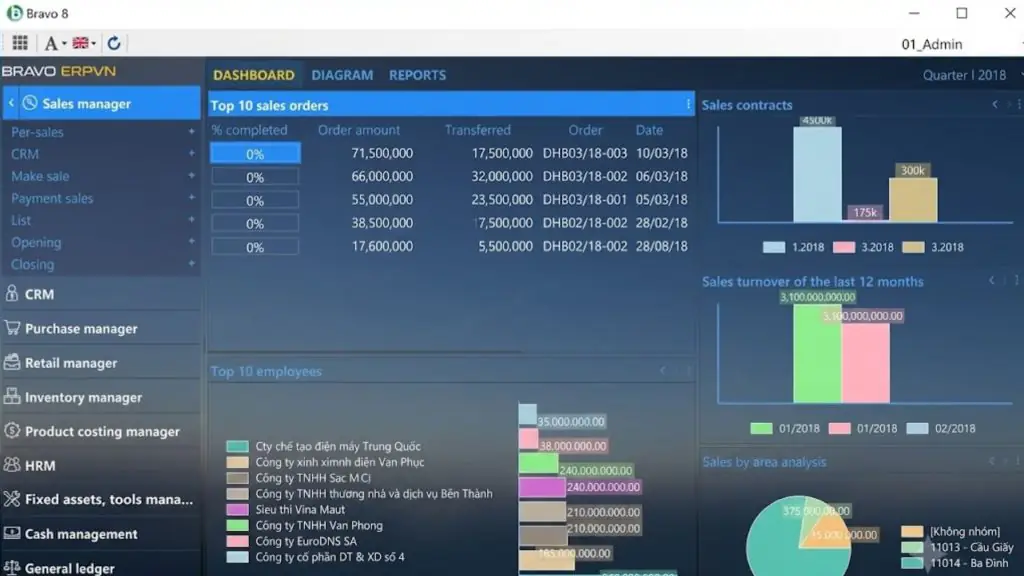
3. BRAVO ERP construction management software
BRAVO ERP is a business management solution developed to fit the needs of each individual organization. The software supports managing finance, materials, contracts, and projects, and can be customized to the specific processes of a construction business.
Pros
- Customizable to the business’s processes.
- Centralized management on a construction ERP system.
- Strong scalability.
Cons
- Implementation time can be lengthy.
- Requires user training during operation.
Best suited for: Businesses with specialized management processes that need an ERP system.
4. FastCons construction management software
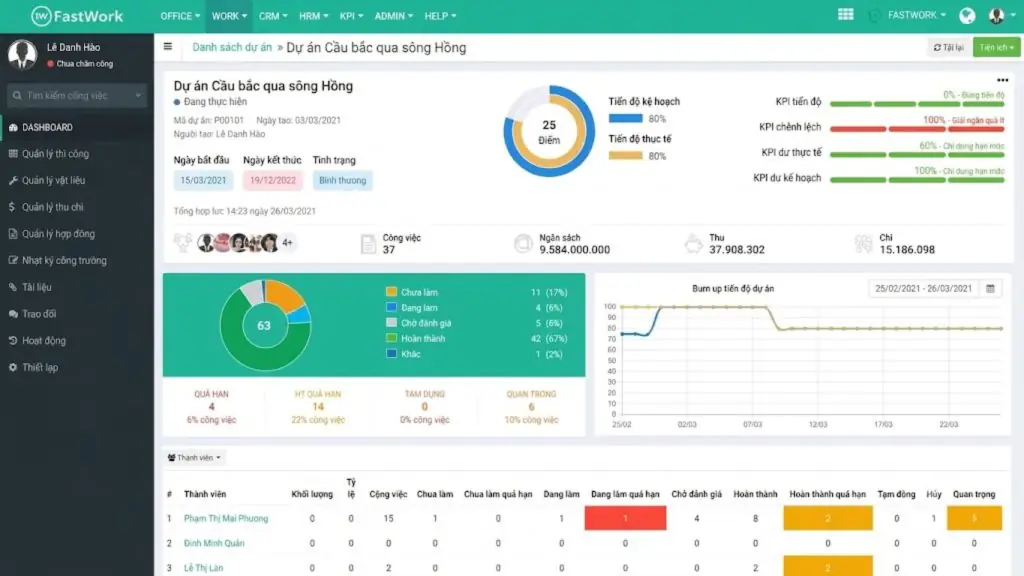
FastCons is software developed specifically for the construction sector, helping businesses manage progress, costs, materials, contracts, and project records within a single system.
Pros
- Focused on construction operations.
- Effective tracking of progress and costs.
- Visual reporting.
Cons
- Scalability depends on the deployment package.
- Some features need to be configured on request.
Best suited for: Contractors and construction businesses in Vietnam.
5. IBOM construction management software
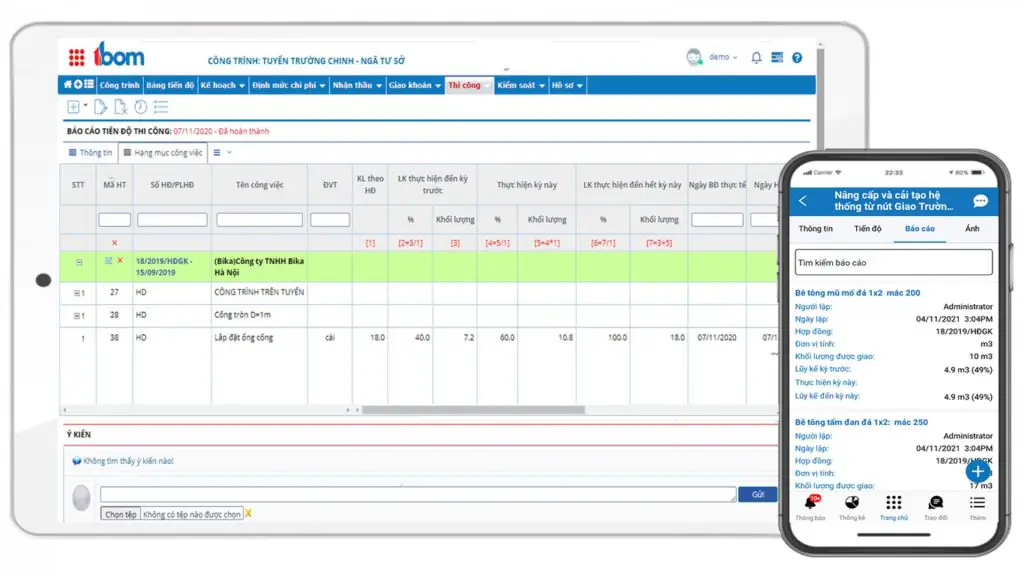
IBOM is software that supports managing sites, personnel, equipment, and construction progress on a digital platform. The solution helps businesses track on-site activities in real time and improve coordination between departments.
Pros
- A user-friendly interface.
- Real-time progress tracking.
- Well suited to small and medium-sized enterprises.
Cons: Fewer end-to-end management features than ERP systems.
Best suited for: Businesses that need to digitize site management at a reasonable cost.
>>> Learn more:
- TOP 15+ largest and most reputable software companies in Vietnam 2026
- Top 15 production management software options for businesses in 2026
Applying AI in digital transformation of the construction industry
AI is becoming one of the core technologies driving digital transformation in the construction industry. With its ability to analyze data, recognize images, and automate processes, AI helps businesses improve management efficiency, reduce risks, and make decisions faster.
AI Computer Vision for monitoring safety and construction progress
AI Computer Vision uses cameras combined with artificial intelligence to analyze on-site images in real time. The system can recognize unsafe behaviors such as not wearing a safety helmet or entering hazardous areas, or detect delays during construction.
As a result, businesses reduce construction monitoring time, improve occupational safety, and control construction progress management more effectively.
AI for forecasting project progress, costs, and risks
AI can analyze data from previous projects combined with current data to forecast the risk of delays, budget overruns, or resource shortages. This helps managers proactively adjust plans before risks affect the entire project.
AI for data analysis and decision support
Instead of consolidating reports manually, AI can process large volumes of data on progress, costs, materials, and personnel to create visual reports in real time. As a result, leadership can easily track the project situation and make decisions based on data rather than intuition.
AI for automating repetitive tasks
AI can help handle tasks such as data entry, classifying records, checking documents, or sending automatic notifications. Automation helps reduce the workload for staff, limit errors, and improve operational efficiency.
AI Chatbot for customer support
An AI Chatbot can automatically answer common questions, provide project information, receive requests, and support customers 24/7. This helps businesses improve the customer experience while reducing pressure on the sales and customer care teams.
AI for planning and resource allocation
AI can analyze construction progress, workload, and personnel status to propose suitable resource allocation plans. This helps businesses use labor, equipment, and materials efficiently while limiting shortages or surpluses of resources during project execution.
AI only truly delivers value when it is implemented in a way that fits each business’s processes and infrastructure. With experience developing custom AI solutions, TOT helps construction businesses map out a roadmap for applying AI, integrating it with existing systems, and gradually automating management processes. Contact TOT for advice on the solution best suited to your business.
Why choose custom software development?
Not every construction business is a good fit for off-the-shelf software. Each organization has different management processes, project delivery models, and integration needs. Therefore, custom construction management software helps businesses digitize the right operations, optimize processes, and easily scale as they grow.
For example, a business that only needs to manage progress and materials will have different needs from a general contractor that must manage multiple sites and subcontractors and integrate a construction ERP system. This is why many businesses choose custom software development instead of using packaged software.
| Off-the-shelf software | Custom software |
| Fixed processes, little customization | Designed around the business’s management processes |
| Struggles to meet specialized operations | Fits each construction model and process |
| Hard to scale as needs change | Easy to add features at each development stage |
| Limited integration capabilities | Flexible connectivity with ERP, CRM, BIM, AI, and existing systems |
| May have redundant or missing features | Only develops the features that are truly needed |
>>> See also:
- Professional custom software development service in Hanoi
- Custom software development in HCMC, professional design across a wide range of platforms
Custom construction management software development solutions from TOT
TOT provides custom construction management software development solutions that meet the management needs of each business rather than applying a fixed model. The solutions that can be deployed include:
- Designing software around the business’s specific management processes.
- Centralized management of progress, costs, materials, personnel, and project records on a single system.
- Integration with construction ERP, CRM, BIM, AI, and existing software to synchronize data.
- Applying AI to automate processes, analyze data, and support decision-making.
>>> Learn more:
- Custom software design tailored to you, at a great price, with a professional process
- How is AI in software development applied?
TOT’s real-world delivery capabilities
Beyond advising on solutions, TOT also has experience delivering many digital transformation projects for businesses across various industries. Some notable projects include:
- AI Computer Vision that automatically monitors and analyzes images, helping improve management efficiency.
- The Coteccons Global website with a modern interface that optimizes user experience and performance.
- The Unicons website developed with a focus on strengthening brand recognition and conversion.
- The Sinh Nam website with a design and development solution tailored to the business’s needs.
These projects demonstrate TOT’s capabilities in developing digital solutions aligned with the specific goals and operating processes of each business. Through TOT’s custom software development service, businesses can build a management system suited to their unique operations, with easy integration of AI, ERP, CRM, BIM, and existing platforms.
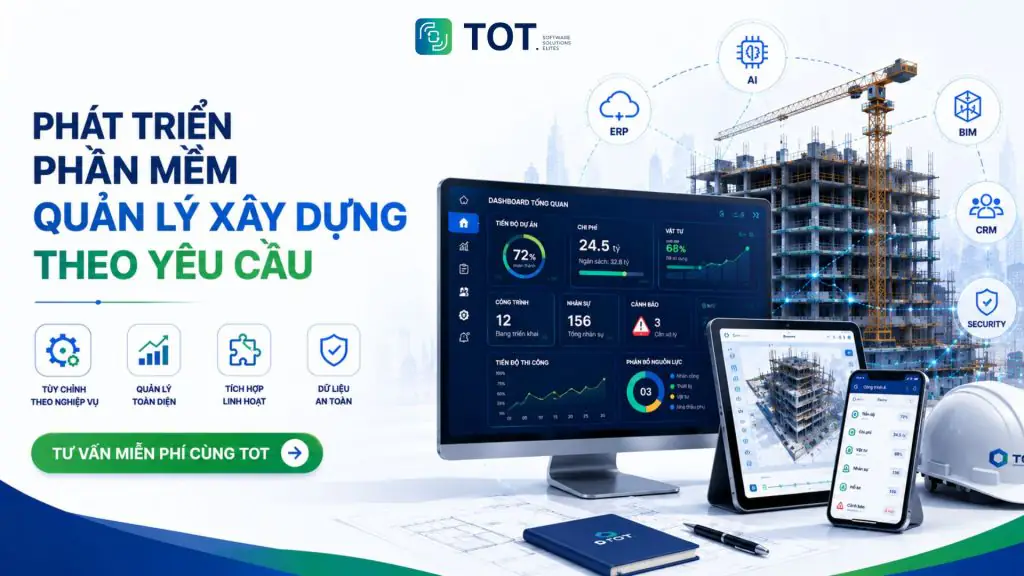
If your business is looking for a construction management solution designed around your exact operating processes and capable of integrating AI, ERP, CRM, or BIM, TOT is ready to accompany you from consulting and design through to implementation and operation.
Conclusion
Digital transformation in the construction industry is no longer just a trend but has become an important factor helping businesses improve management capabilities and competitiveness. Applying technologies such as AI, BIM, IoT, Cloud Computing, or construction management software helps businesses optimize processes and control progress, costs, and data more effectively. However, to succeed at digital transformation, businesses need to choose a solution suited to their scale, operating processes, and development goals. A well-structured implementation roadmap combined with a flexible technology platform will lay the groundwork for sustainable long-term growth.
>>> Read more:
- What is an MES system? Its role, functions, and how to apply it effectively
- What is an ERP system in manufacturing? Benefits, features, and how to use it
Frequently asked questions about digital transformation in the construction industry
What is digital transformation in the construction industry?
Digital transformation in the construction industry is the process of applying digital technology to activities such as design, construction, management, and building operations. The goal is to digitize data, optimize processes, improve productivity, control costs, and help businesses make more accurate decisions.
Where should a construction business start with digital transformation?
Businesses should start with the processes that have the biggest bottlenecks, such as managing progress, materials, or project records. Then, standardize the data, choose suitable software, and implement it in phases to optimize costs and reduce risks.
Is the cost of digital transformation in the construction industry high?
The cost depends on the size of the business and the scope of implementation. Instead of investing everything up front, businesses can implement it in phases or use cloud-based solutions to optimize the budget and easily scale when needed.
How do off-the-shelf software and custom software differ?
Off-the-shelf software has a low cost and quick deployment but limited customization. Custom software, on the other hand, is developed around a business’s own processes, easily integrates with existing systems, and suits long-term scaling needs.
What value does AI bring to digital transformation in construction?
AI helps businesses automate repetitive tasks, monitor occupational safety, forecast progress and costs, and analyze data to support decision-making. As a result, businesses improve management efficiency, reduce risks, and optimize resources during project execution.
TOT is a companion on your digital transformation journey, providing website design, mobile app, custom software, and artificial intelligence software solutions tailored to each business need.
With real-world consulting and implementation experience, TOT helps businesses build a digital transformation roadmap, apply AI, and automate processes to optimize operations, improve production efficiency, and create a sustainable competitive advantage.
TOT contact information:
- 🌐 Website: topon.tech
- 📞 Hotline/WhatsApp/Zalo: 0906 712 137
- ✉️ Email: long.bui@toponseek.com
- 🏢 Address: 31 Hoang Dieu Street, Xom Chieu Ward, Ho Chi Minh City, Vietnam