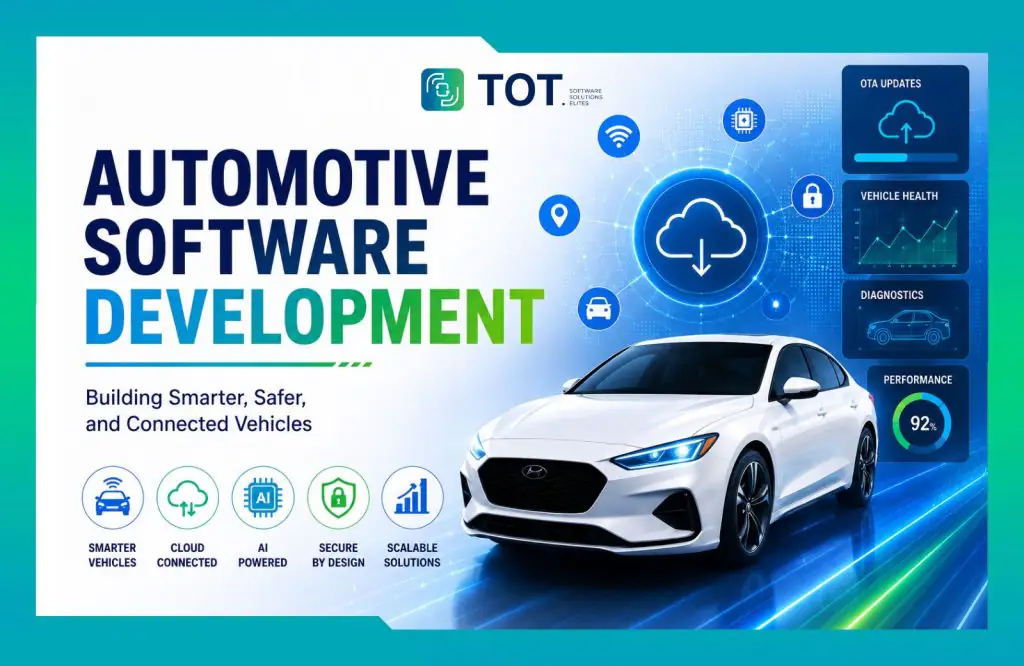
Automotive software development is transforming the way vehicles are built, driven, and serviced—turning vehicles into intelligent, connected, and continuously evolving products. According to Precedence Research, the global automotive software market is expected to grow from USD 52.49 billion in 2025 to USD 134.94 billion by 2034, at a CAGR of 11.1%, driven by software-defined vehicles (SDVs), electric vehicles (EVs), AI, and connected mobility. As software becomes a primary competitive advantage, automotive companies increasingly invest in custom software to improve safety, customer experience, and operational efficiency.
>>> Read more:
- Top 20 Best Vietnam Software Outsourcing Company in 2026
- Website Design Cost for a Transparent Full-Package Quote in 2026
- Create a Free Online Store Website: A Quick, Detailed, and Effective Guide
What Is Automotive Software Development?
Automotive software development is the process of designing, building, testing, and maintaining software that powers vehicles and the businesses around them—including embedded systems inside the car, cloud backends, mobile apps, and dealer or fleet management platforms. It spans everything from low-level firmware controlling engine functions to high-level AI applications that personalize the driving and ownership experience.
Software has become the core of modern vehicles. Today’s cars run on tens of millions of lines of code, and the shift toward Software-Defined Vehicles (SDVs) means features are increasingly delivered and upgraded through software rather than hardware. According to McKinsey, automotive software and electronics are among the fastest-growing areas of value in the industry, with software content per vehicle rising sharply through the decade.
Several market trends are shaping this transformation: the rise of electric vehicles (EVs), connected and autonomous driving, over-the-air (OTA) updates, and new mobility services. As competition shifts from horsepower to software capability, automakers, dealerships, and mobility businesses that invest in strong software engineering gain a decisive advantage in innovation speed, customer experience, and recurring revenue.
Why Automotive Software Development Matters?
Automotive software development matters because it directly improves safety, customer experience, innovation speed, operational efficiency, and revenue. Below are the five most important reasons software has become a strategic priority for the industry.
1. Safer Driving with Intelligent Systems
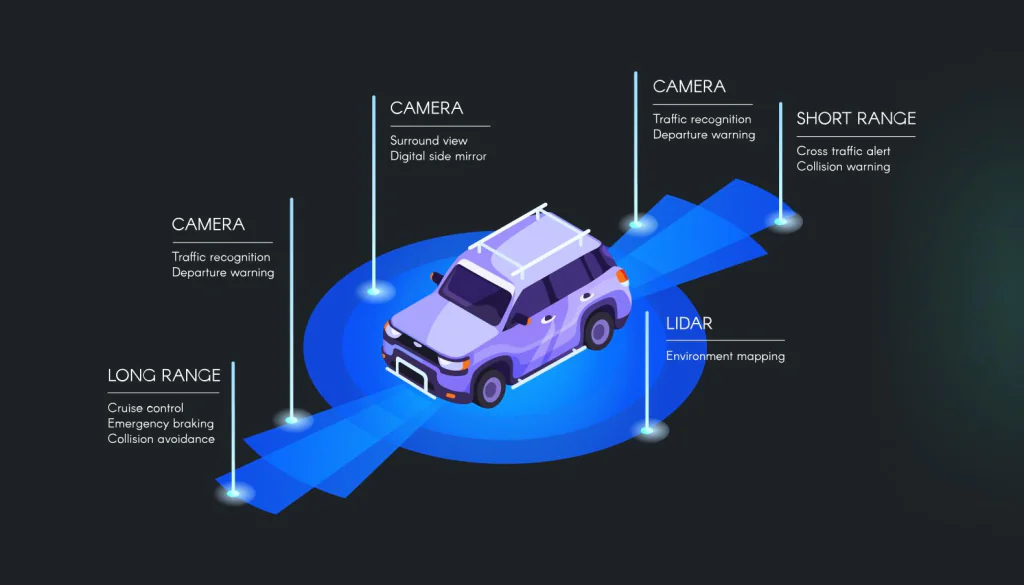
Intelligent software has become the foundation of modern vehicle safety, enabling cars to detect, analyze, and respond to road conditions in real time. By integrating technologies such as Advanced Driver Assistance Systems (ADAS), automotive software helps drivers avoid potential hazards while reducing the risk of accidents caused by human error.
Features like automatic emergency braking, adaptive cruise control, lane-keeping assist, and blind-spot monitoring rely on sophisticated software to process data from cameras, radar, and sensors within milliseconds. As these technologies continue to evolve, automotive software is playing an increasingly important role in protecting drivers, passengers, and pedestrians while making every journey safer and more reliable.
>>> See more: TOP 20 Offshore Software Development Companies in Vietnam 2026
2. Better Customer Experience Through Connected Vehicles
Connected vehicle software is redefining how drivers interact with their vehicles by delivering a seamless digital experience both inside and outside the car. Instead of functioning as standalone machines, modern vehicles are becoming connected platforms that integrate with smartphones, cloud services, and smart devices.
This connectivity enables features such as real-time navigation, remote vehicle control, personalized driver profiles, infotainment services, and over-the-air (OTA) updates. By continuously delivering new features and digital services, automotive software enhances customer satisfaction, strengthens brand loyalty, and transforms vehicle ownership into an ongoing connected experience.
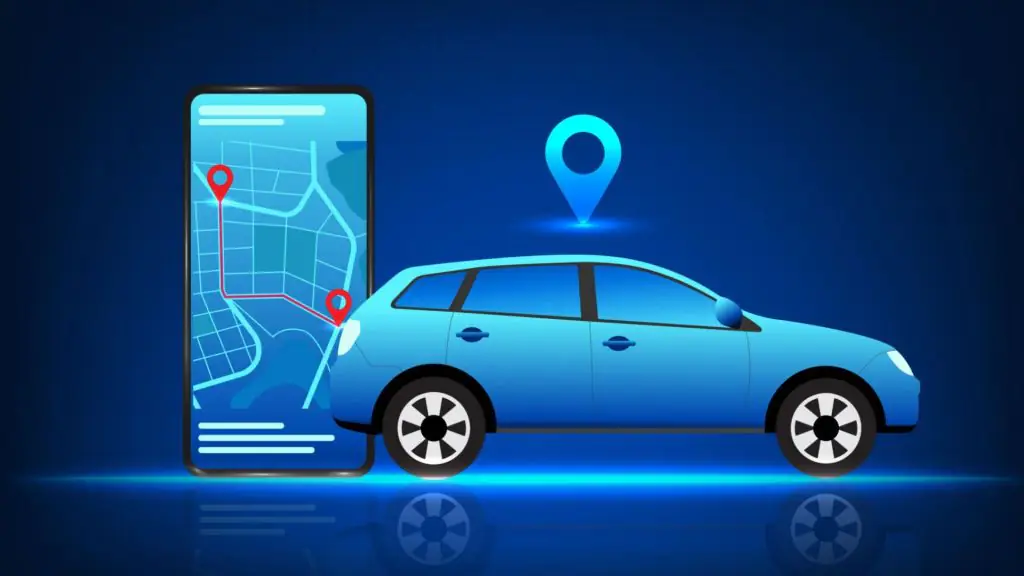
Faster Innovation with Software-Defined Vehicles (SDVs)
Software-Defined Vehicles (SDVs) are changing how vehicles are developed by shifting innovation from hardware to software. Instead of waiting for new vehicle models, manufacturers can introduce new capabilities, improve existing functions, and resolve software issues through continuous software updates.
This approach significantly shortens development cycles while enabling automakers to respond quickly to market demands and customer feedback. By supporting over-the-air (OTA) updates, SDVs allow vehicles to evolve throughout their lifecycle, making them smarter, more adaptable, and better prepared for future technologies.
>>> See more: Software Development Life Cycle (SDLC): 6 Basic Steps You Should Know
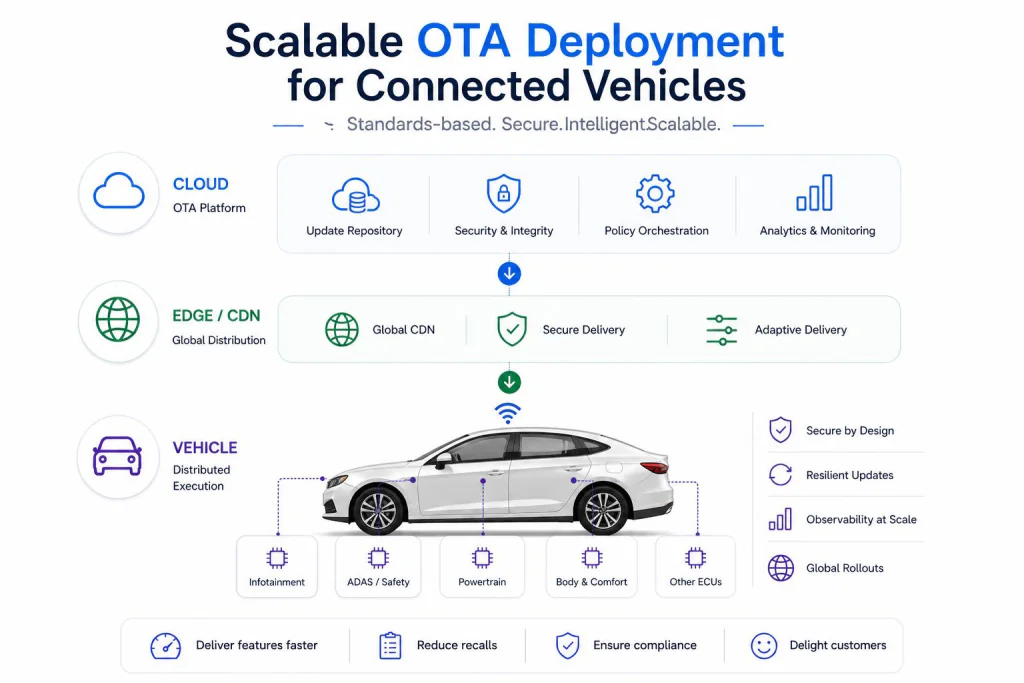
Operational Efficiency and Predictive Maintenance
Automotive software helps businesses operate more efficiently by continuously monitoring vehicle performance and analyzing operational data in real time. Rather than relying on scheduled inspections alone, intelligent software can detect abnormal conditions early and recommend maintenance before failures occur.
Predictive maintenance not only reduces unexpected downtime but also extends vehicle lifespan and lowers repair costs. For manufacturers, dealerships, and fleet operators, these capabilities improve resource planning, optimize maintenance schedules, and ensure vehicles remain in peak operating condition while reducing overall operating expenses.
>>> Read more:
- Mobile App Design Development: The Complete Guide for Designers
- Mobile App Development Project Plan: Guide to Build a Successful App in 2026
- How Much Does E-Commerce Mobile App Development Cost in 2026?
New Revenue Opportunities from Mobility Services
Modern automotive software is creating new business opportunities beyond traditional vehicle sales by enabling digital products and connected services throughout the ownership journey. As vehicles become increasingly software-driven, manufacturers can continue delivering value long after a car leaves the showroom.
Subscription-based features, Mobility-as-a-Service (MaaS), connected vehicle services, premium infotainment, and AI-powered customer applications allow businesses to generate recurring revenue while strengthening long-term customer relationships. These software-enabled business models are helping automotive companies diversify their income streams and remain competitive in an increasingly digital industry.
For more insights about automotive software, check out this research paper: Automotive Software (IEEE Software, 2017)
Types of Automotive Software Solutions
Automotive software solutions extend far beyond the software running inside a vehicle. They cover embedded systems that control vehicle functions, connected platforms that enable real-time communication, and business applications that help dealerships, manufacturers, and fleet operators streamline operations. Depending on the business model and product goals, companies often combine multiple software solutions into one integrated automotive ecosystem.
1. Infotainment systems
Modern infotainment systems have evolved into the digital hub of today’s vehicles, bringing entertainment, navigation, communication, and vehicle controls together in a single interface. By integrating cloud services, smartphones, and voice assistants, infotainment software enhances the overall driving experience while helping automakers differentiate their vehicles in an increasingly competitive market. Typical capabilities include:
- GPS navigation with real-time traffic updates
- Apple CarPlay and Android Auto integration
- Music and video streaming
- Voice assistants and hands-free communication
- Bluetooth and Wi-Fi connectivity
- Personalized driver profiles
- Remote app connectivity
As consumer expectations continue to rise, infotainment software must deliver fast performance, intuitive user interfaces, and seamless OTA updates to ensure vehicles remain modern throughout their lifecycle.
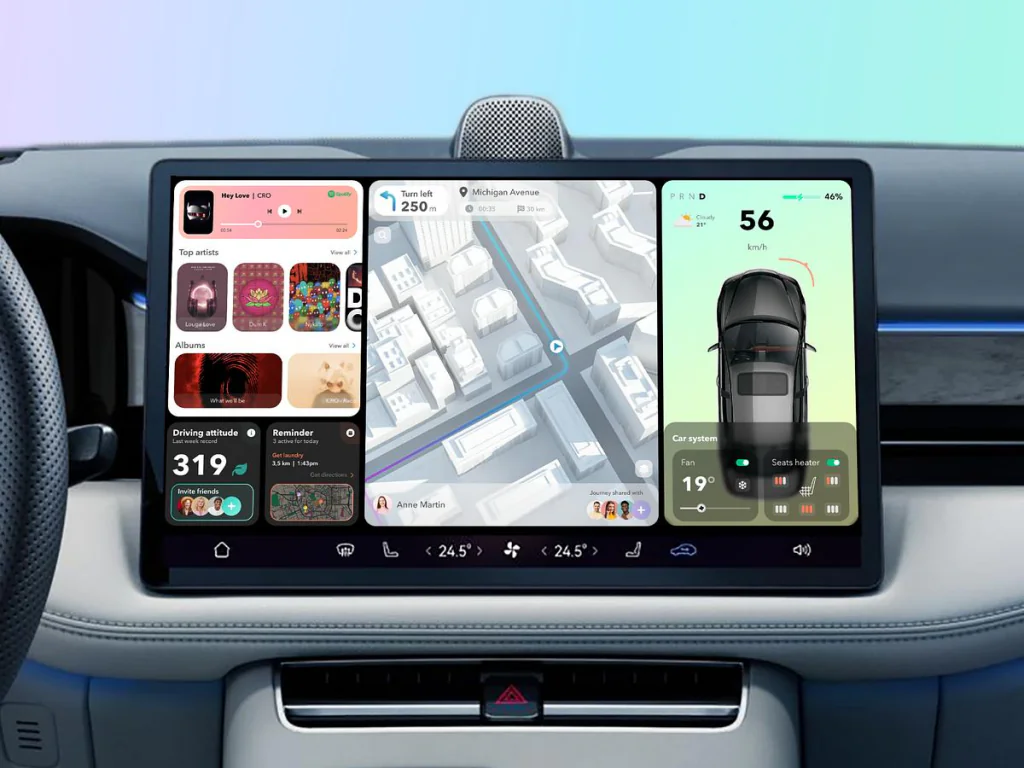
2. Fleet management software
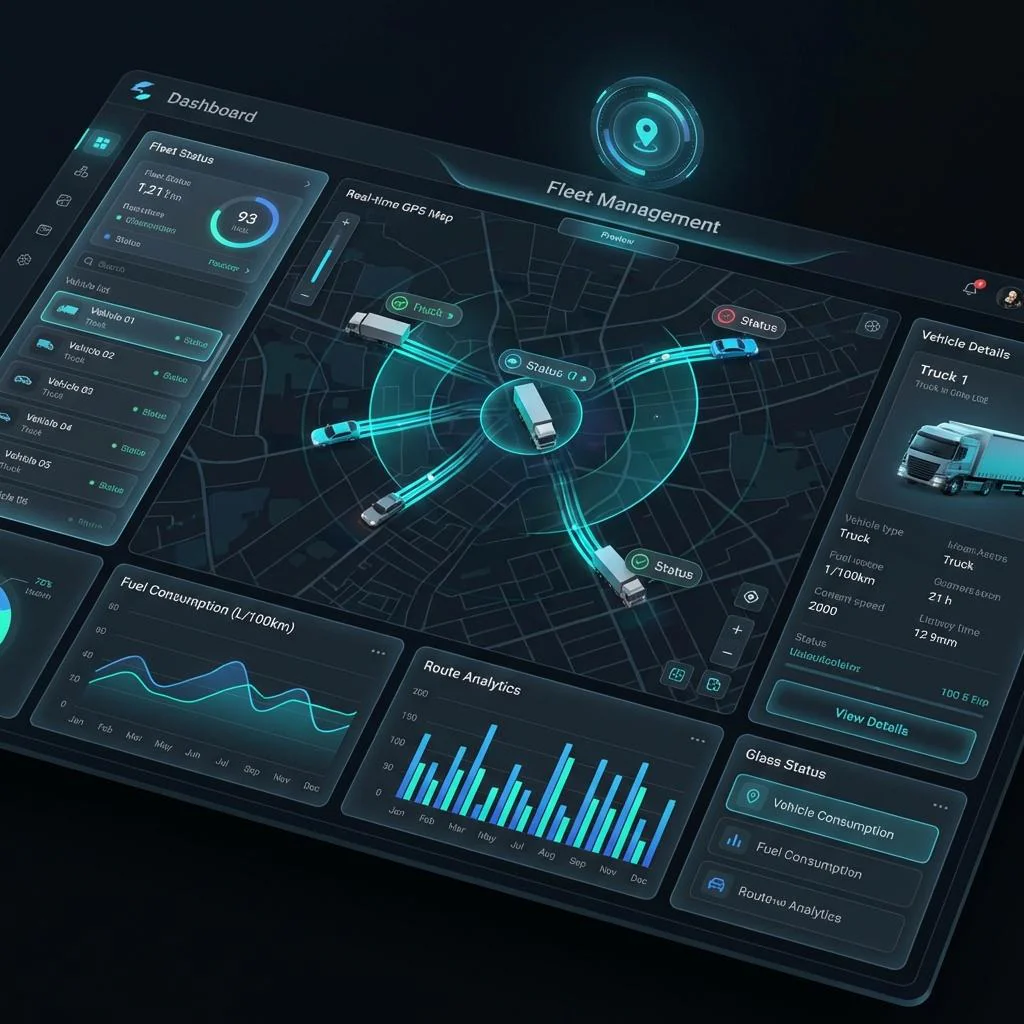
Fleet management software helps businesses monitor, manage, and optimize their commercial vehicle operations from a single platform. By providing real-time visibility into fleet performance, these solutions improve operational efficiency, reduce costs, and enhance driver safety. Key features typically include:
- Real-time GPS vehicle tracking
- Route planning and optimization
- Driver behavior monitoring
- Fuel consumption analysis
- Maintenance scheduling
- Fleet performance reporting
A modern fleet management platform enables logistics providers, transportation companies, and enterprise fleets to make data-driven decisions while improving vehicle utilization and minimizing operational downtime.
>>> See more:
- Custom Software Development in Ho Chi Minh City – Professional, Multi-Platform Solutions
- Custom Software Development in Hanoi – Professional and Affordable Solutions
3. Vehicle diagnostics software
Vehicle diagnostics software enables manufacturers, dealerships, and service centers to monitor vehicle health and identify potential issues before they become serious problems. By analyzing data collected from onboard systems and sensors, these solutions help streamline maintenance and improve vehicle reliability. Typical features include:
- On-board diagnostics (OBD) integration
- Fault code detection and analysis
- Real-time vehicle health monitoring
- Predictive maintenance alerts
- Performance diagnostics
- Service history tracking
With faster fault detection and proactive maintenance recommendations, vehicle diagnostics software reduces repair costs, minimizes unexpected breakdowns, and helps keep vehicles operating at peak performance.
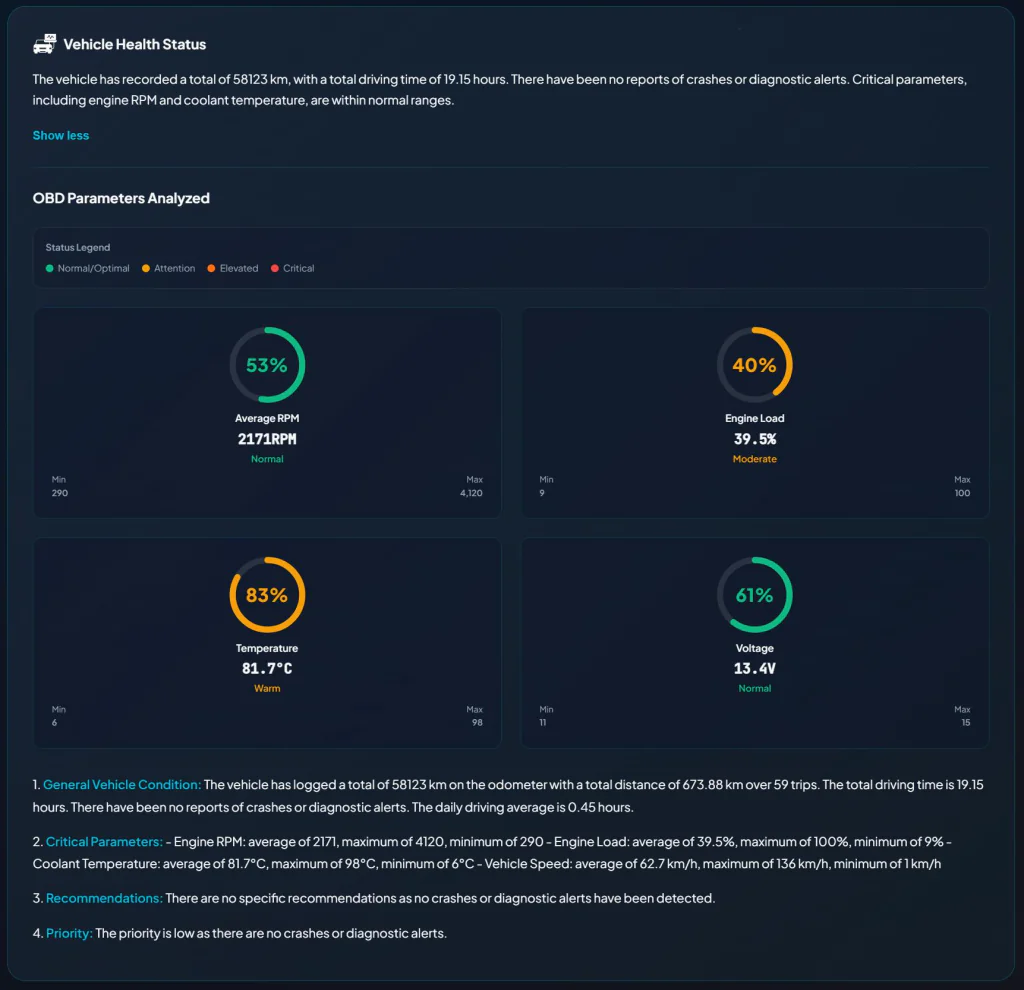
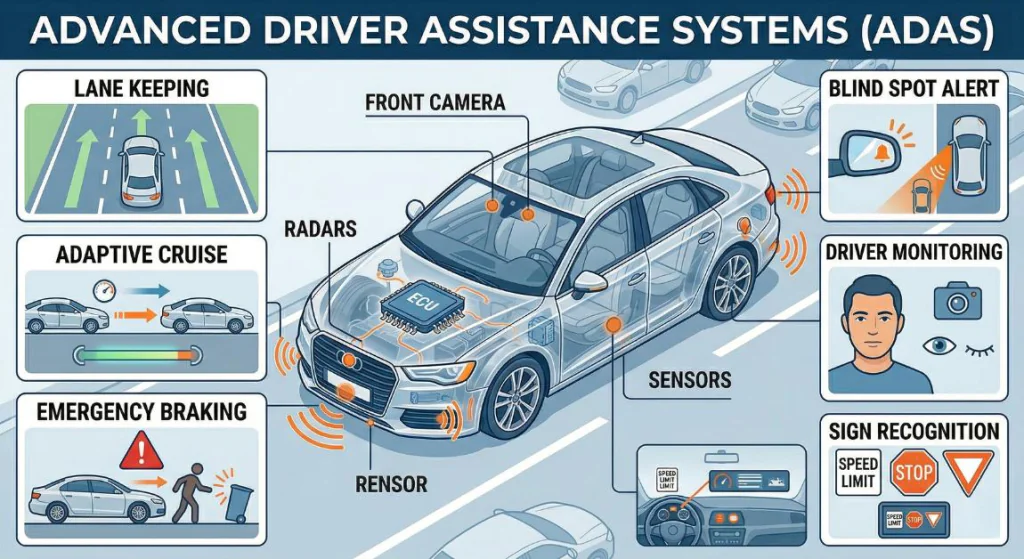
4. Driver Assistance Systems (ADAS)
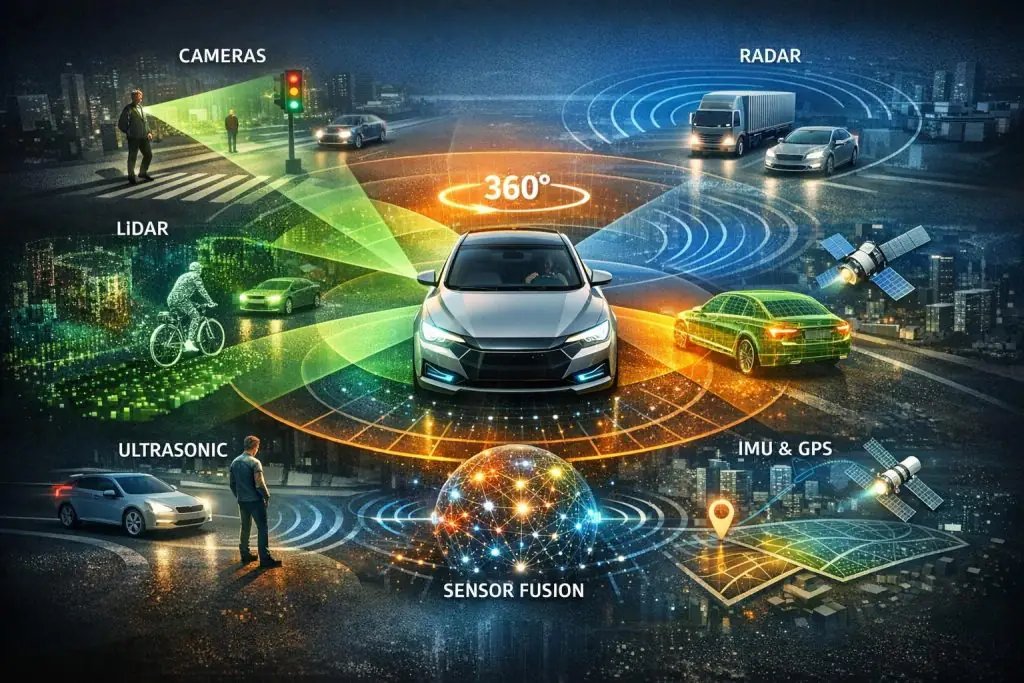
ADAS software is designed to make driving safer by assisting drivers in real time and reducing the risk of human error. By continuously processing data from cameras, radar, LiDAR, and other sensors, these systems help drivers respond more quickly to potential hazards while making everyday driving more comfortable. Common capabilities include:
- Adaptive cruise control
- Automatic emergency braking (AEB)
- Lane departure warning and lane-keeping assist
- Blind spot detection
- Traffic sign recognition
- Parking assistance
Because these features directly affect road safety, ADAS software must provide highly accurate, low-latency decision-making while complying with strict functional safety standards.
5. Autonomous driving software
Automotive CRM software helps dealerships manage customer relationships throughout the entire ownership lifecycle. Typical features include:
- Lead and opportunity management
- Sales pipeline tracking
- Appointment scheduling
- Service reminders
- Marketing automation
- Customer segmentation
- Loyalty and retention programs
To maximize customer lifetime value, automotive CRM should integrate seamlessly with DMS, ERP, and AI-powered analytics while delivering personalized communication across multiple channels.
>>> Explore more:
- What Is Custom Enterprise Software Development? Full Guide
- Custom Mobile App Development Services: Everything You Need to Know
6. Electric Vehicle (EV) software
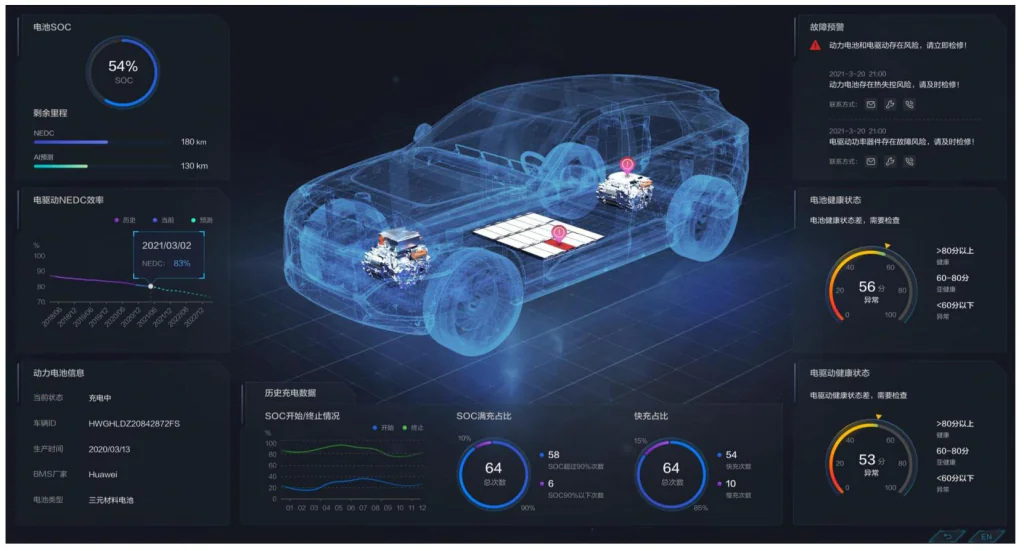
Electric Vehicle (EV) software manages the core systems that power electric vehicles, helping optimize battery performance, energy consumption, charging efficiency, and overall driving range. As EV adoption continues to grow worldwide, intelligent software has become essential for delivering safer, smarter, and more sustainable mobility. Typical features include:
- Battery Management System (BMS)
- Charging and energy optimization
- Thermal management
- Regenerative braking control
- Battery health monitoring
- Range prediction and optimization
To maximize vehicle performance and battery lifespan, EV software must continuously analyze real-time data and adapt to different driving conditions while supporting future software upgrades through OTA updates.
>>> Read more:
- Software Development Company in Vietnam – Top 10 Best Choices
- Custom Software Development for all needs: great price, professional process
7. Connected vehicle platforms
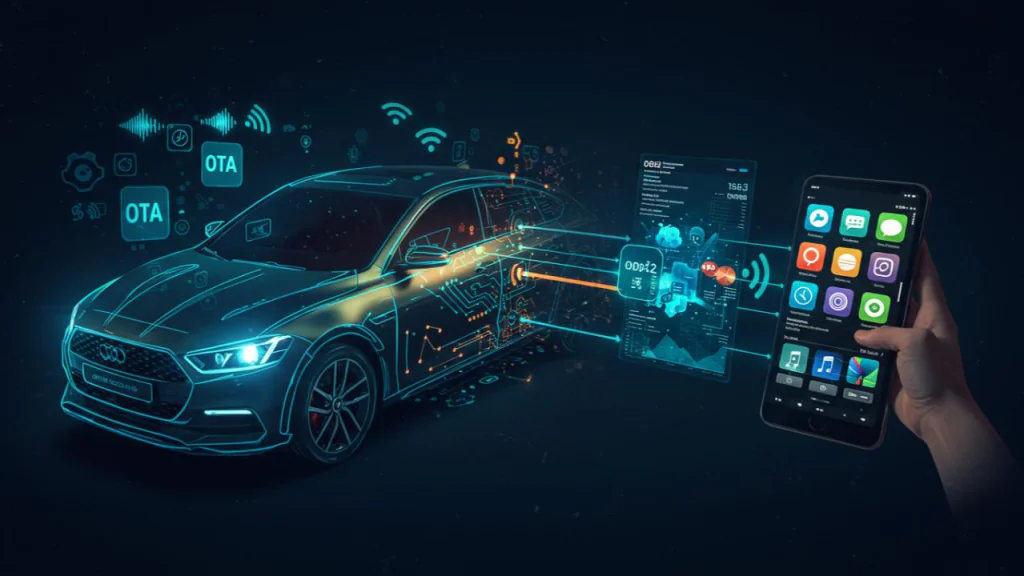
Connected vehicle platforms enable vehicles to communicate with cloud services, mobile applications, roadside infrastructure, and other connected devices. By creating a continuous flow of real-time data, these platforms improve safety, convenience, and the overall driving experience. Typical features include:
- Over-the-air (OTA) software updates
- Remote vehicle monitoring
- Mobile app integration
- Remote diagnostics
- Vehicle-to-Everything (V2X) communication
- Real-time vehicle status and alerts
A reliable connected vehicle platform must deliver secure, low-latency communication while supporting millions of connected vehicles and digital services at scale.
8. Telematics solutions
Telematics software combines GPS technology, onboard sensors, and wireless communication to collect and analyze vehicle data in real time. It enables businesses to monitor vehicle location, usage, and performance while improving operational visibility across fleets. Typical features include:
- Real-time GPS tracking
- Driver behavior monitoring
- Vehicle usage analytics
- Fuel consumption tracking
- Geofencing
- Predictive maintenance alerts
By transforming vehicle data into actionable insights, telematics solutions help organizations improve fleet efficiency, reduce operating costs, and enhance driver safety.
9. Dealer Management Systems (DMS)
Dealer Management Systems (DMS) streamline dealership operations by centralizing sales, inventory, finance, service, and customer information into a single platform. This enables dealerships to improve operational efficiency while delivering a more consistent customer experience. Typical features include:
- Vehicle inventory management
- Sales and quotation management
- Service scheduling
- Warranty management
- Finance and accounting
- Business reporting and analytics
An integrated DMS reduces manual processes, improves collaboration between departments, and provides dealerships with greater visibility into daily operations and business performance.
10. Automotive CRM and customer applications
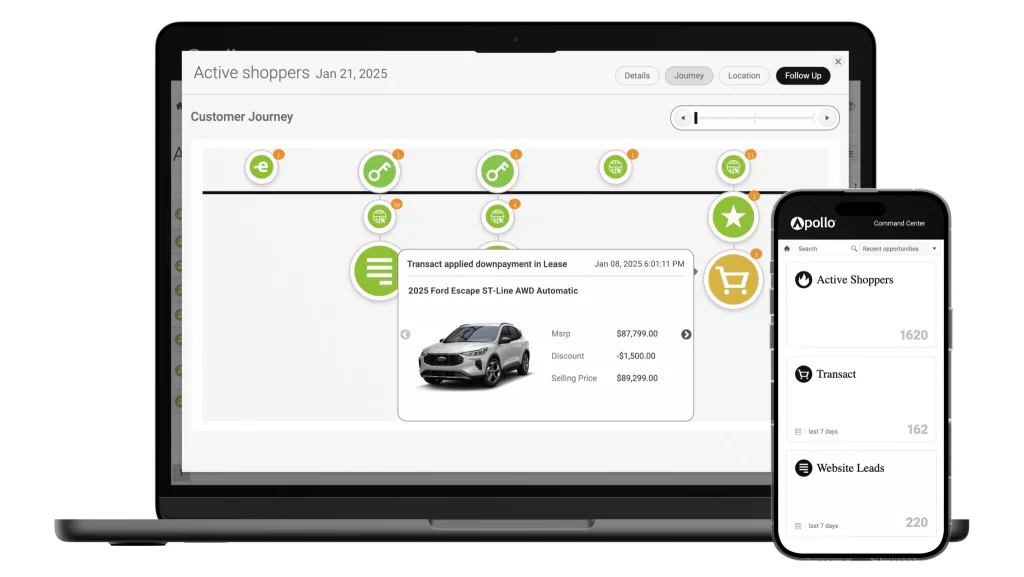
Automotive CRM and customer applications help dealerships and automotive businesses build stronger relationships throughout the customer lifecycle—from lead generation and vehicle sales to after-sales service and customer retention. These solutions enable more personalized engagement while improving sales performance and customer loyalty. Typical features include:
- Lead and customer management
- Sales pipeline tracking
- Appointment scheduling
- Service reminders
- Marketing automation
- Customer loyalty and retention programs
- Mobile customer applications
When integrated with Dealer Management Systems (DMS), ERP platforms, and AI-powered analytics, automotive CRM solutions provide a 360-degree view of each customer, enabling businesses to deliver personalized experiences and maximize customer lifetime value.
>>For more insights about automotive software, check out this PDF file here:
Source: Christof Ebert and John Favaro, “Automotive Software,” IEEE Software, 2017, 34(3), 33–39.
Key Technologies Used in Automotive Software Development
Modern automotive software is built on a combination of advanced technologies that work together to make vehicles safer, smarter, and more connected. Rather than relying solely on embedded systems, today’s automotive solutions integrate artificial intelligence, cloud computing, connected vehicle technologies, and cybersecurity to support everything from autonomous driving and predictive maintenance to fleet management and personalized customer experiences.
As vehicles continue to evolve into software-defined platforms, these technologies are becoming the foundation of innovation across the automotive industry. Understanding how each technology contributes to software development helps businesses choose the right solution while preparing for future trends in connected and intelligent mobility.
Artificial Intelligence (AI) and Machine Learning (ML)
Artificial Intelligence (AI) and Machine Learning (ML) are transforming automotive software by enabling vehicles and automotive businesses to analyze large volumes of data, recognize patterns, and make intelligent decisions automatically. Instead of relying on predefined rules alone, AI continuously learns from vehicle data, driver behavior, and operational information to improve performance over time.
Today, AI is widely used in predictive maintenance, Advanced Driver Assistance Systems (ADAS), autonomous driving, driver behavior analysis, customer personalization, and automotive CRM. As vehicles become increasingly connected and software-defined, AI will continue to play a central role in improving road safety, operational efficiency, and customer experience.
Computer Vision
Computer vision enables automotive software to understand and interpret visual information captured by cameras and imaging sensors. Combined with artificial intelligence, it allows vehicles to detect surrounding objects, recognize traffic signs, monitor drivers, and analyze road conditions in real time.
This technology is widely applied in autonomous driving, parking assistance, lane detection, driver monitoring systems, and license plate recognition. As modern vehicles rely more heavily on visual perception, computer vision has become one of the core technologies supporting intelligent transportation and advanced vehicle safety.
Internet of Things (IoT)
The Internet of Things (IoT) connects vehicles, onboard sensors, cloud platforms, and mobile applications into a single digital ecosystem. By continuously exchanging real-time data, IoT enables vehicles to remain connected throughout their lifecycle while providing valuable operational insights for manufacturers, dealerships, fleet operators, and drivers.
IoT powers many connected vehicle services such as remote diagnostics, vehicle tracking, predictive maintenance, remote control through mobile applications, and smart charging for electric vehicles. As connected mobility continues to expand, IoT serves as the backbone for many modern automotive software solutions.
Cloud Computing
Cloud computing provides the infrastructure needed to store, process, and manage the massive amount of data generated by connected vehicles every day. Instead of performing every task inside the vehicle, many automotive applications rely on cloud platforms to support real-time analytics, connected services, fleet management, and remote software delivery.
Cloud-based architectures also make it easier to deploy new features through over-the-air (OTA) updates, synchronize data across multiple systems, and scale services for millions of vehicles worldwide. For automotive businesses, cloud computing enables faster innovation while reducing infrastructure complexity and operating costs.
Edge Computing
While cloud computing handles large-scale processing remotely, edge computing performs data processing directly inside the vehicle or at nearby edge devices. This significantly reduces latency, allowing critical driving decisions to be made within milliseconds without depending on internet connectivity.
Edge computing is especially important for safety-critical applications such as collision avoidance, driver monitoring, autonomous driving, and Advanced Driver Assistance Systems (ADAS). By processing data closer to where it is generated, edge computing improves system responsiveness while increasing the reliability of modern automotive software.
Big Data Analytics
Every connected vehicle generates an enormous amount of information, from sensor readings and driving behavior to maintenance records and customer interactions. Big Data Analytics helps automotive companies transform this information into meaningful insights that support smarter business decisions and better vehicle performance.
Manufacturers use analytics to improve product quality, dealerships leverage customer insights to personalize services, while fleet operators optimize routes, fuel consumption, and maintenance schedules. As data continues to grow exponentially, analytics has become one of the key competitive advantages in the automotive industry.
Digital Twin
A digital twin is a virtual representation of a physical vehicle, component, or manufacturing process that allows engineers to simulate real-world conditions before deployment. Instead of relying solely on physical testing, manufacturers can evaluate performance, predict failures, and optimize designs in a digital environment.
Digital Twin technology is increasingly used throughout the automotive lifecycle, from product development and manufacturing to predictive maintenance and software validation. By reducing development time and minimizing costly physical prototypes, it enables faster innovation while improving product quality.
Vehicle-to-Everything (V2X)
Vehicle-to-Everything (V2X) technology enables vehicles to communicate with surrounding vehicles, road infrastructure, pedestrians, and cloud services in real time. This continuous exchange of information improves traffic efficiency, enhances situational awareness, and helps reduce accidents.
As autonomous driving and smart city initiatives continue to evolve, V2X is becoming an essential technology for enabling safer and more intelligent transportation systems. It also lays the foundation for future connected mobility services that depend on seamless communication across the entire transportation ecosystem.
Over-the-Air (OTA) Updates
Over-the-Air (OTA) technology allows manufacturers to remotely deliver software updates, bug fixes, security patches, and new features without requiring vehicle owners to visit a dealership or service center. Similar to smartphone software updates, OTA significantly shortens deployment cycles while reducing maintenance costs.
Beyond improving convenience, OTA updates enable manufacturers to continuously enhance vehicle functionality throughout its lifecycle. This capability has become one of the defining characteristics of Software-Defined Vehicles (SDVs), where software evolves long after the vehicle leaves the factory.
Cybersecurity
As modern vehicles become increasingly connected, protecting software and data has become just as important as improving vehicle performance. Automotive cybersecurity focuses on safeguarding connected systems from cyberattacks, unauthorized access, data breaches, and software vulnerabilities that could compromise both safety and privacy.
Security is now embedded throughout the software development lifecycle, covering secure communication, authentication, encryption, intrusion detection, and compliance with standards such as ISO/SAE 21434. Strong cybersecurity practices help manufacturers build trustworthy connected vehicles while protecting drivers, passengers, and business data.
Automotive Software Development Process
Building automotive software is not simply about writing code. It requires a structured development process that aligns business objectives, user experience, vehicle technologies, and long-term scalability. From understanding operational challenges to maintaining software after deployment, every stage plays an important role in delivering a reliable, secure, and future-ready automotive solution.
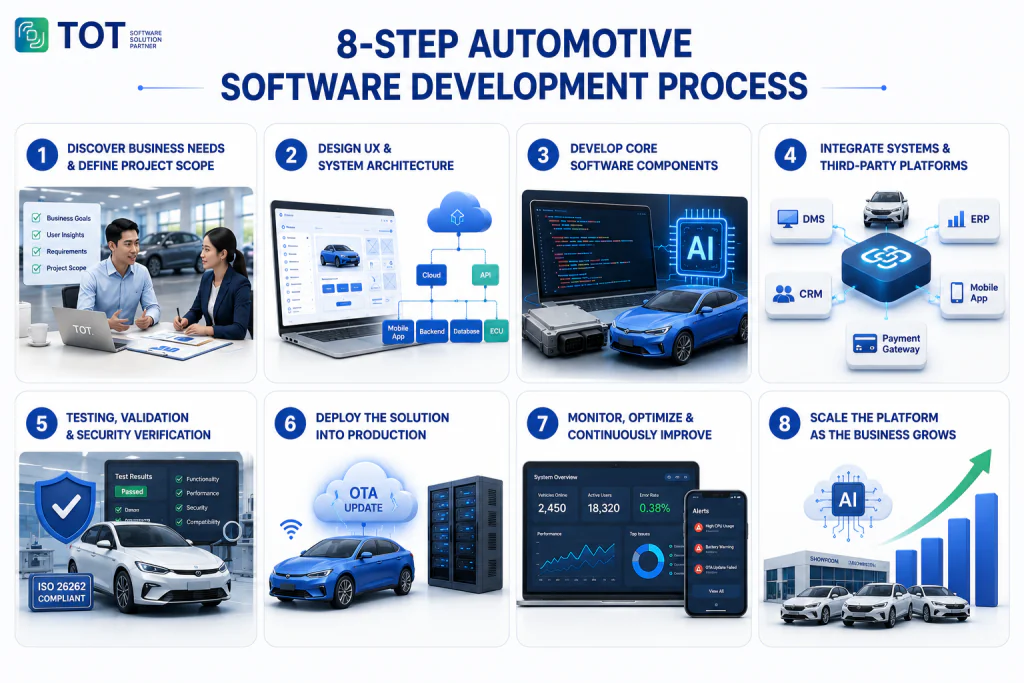
Although each project has its own requirements, most automotive software projects follow the eight stages below.
Step 1. Discover Business Needs and Define Project Scope
Every project begins with understanding the client’s business rather than the technology itself. Before proposing a solution, the development team works closely with stakeholders to identify operational challenges, business goals, existing workflows, and the problems that need to be solved.
This discovery phase also helps determine the software’s core functionalities, integration requirements, compliance standards, timeline, and technical constraints. A clear project scope minimizes misunderstandings, controls development costs, and ensures the solution is built around real business needs instead of unnecessary features.
Step 2. Design the User Experience and System Architecture
After defining the project scope, the next step is transforming business requirements into a scalable software architecture and intuitive user experience.
Depending on the project, designers create interfaces for drivers, dealership staff, technicians, or fleet managers, while solution architects define how embedded software, cloud platforms, AI services, mobile applications, and enterprise systems will interact. Building a strong architecture early makes future expansion, integration, and maintenance significantly easier.
Step 3. Develop Core Software Components
Once the design is approved, development begins across multiple software layers. Unlike traditional business software, automotive projects often combine embedded systems, cloud services, web applications, mobile apps, APIs, and AI technologies within a single ecosystem.
Development teams focus on writing secure, high-performance, and maintainable code while ensuring every component works reliably under real-world operating conditions. Agile development practices allow new features to be delivered incrementally, making collaboration more transparent throughout the project.
Step 4. Integrate Systems and Third-Party Platforms
Modern automotive software rarely operates in isolation. To create a seamless digital ecosystem, the solution must integrate with existing business platforms, connected vehicles, IoT devices, payment systems, ERP, CRM, Dealer Management Systems (DMS), and external APIs.
Successful integration allows information to flow automatically between departments and systems, eliminating duplicate data entry while improving operational efficiency and decision-making across the organization.
Step 5. Validate Performance, Safety, and Security
Before deployment, the software undergoes comprehensive testing to verify functionality, reliability, performance, and cybersecurity. For automotive applications, testing goes beyond finding software bugs—it also ensures the system can perform consistently in real-world environments while meeting applicable automotive standards.
Depending on the project scope, validation may include functional testing, integration testing, security assessments, hardware compatibility testing, and performance optimization before the software is approved for production.
Step 6. Deploy the Solution into Production
After successful validation, the software is deployed to its target environment. This may involve cloud infrastructure, dealership systems, fleet platforms, mobile applications, or embedded vehicle hardware.
Deployment is carefully planned to minimize operational disruption, maintain data integrity, and ensure a smooth transition from development to production. Where applicable, deployment can also include secure over-the-air (OTA) delivery for connected vehicles.
Step 7. Monitor, Optimize, and Continuously Improve
Launching the software is only the beginning of its lifecycle. Once the system is live, development teams continuously monitor application performance, user behavior, infrastructure health, and security events to identify opportunities for improvement.
Real-world usage often reveals new requirements that were not identified during development. Continuous optimization helps improve system stability, enhance user experience, and ensure the software evolves alongside changing business needs.
Step 8. Scale the Platform as the Business Grows
As automotive businesses expand, their software must evolve accordingly. New dealerships, additional vehicle models, AI capabilities, connected services, or regional operations may require the platform to support significantly higher workloads and more complex business processes.
A well-designed automotive software platform allows organizations to introduce new features, integrate emerging technologies, and scale infrastructure without rebuilding the entire system. This flexibility enables businesses to respond faster to market changes while protecting their long-term technology investment.
Challenges in Automotive Software Development
Developing automotive software is uniquely demanding due to safety, security, and complexity requirements. Understanding these challenges helps businesses plan realistically and choose the right expertise.
- Functional safety (ISO 26262): software must meet strict safety standards to prevent malfunctions that could endanger lives, requiring rigorous processes and documentation.
- Automotive cybersecurity (ISO/SAE 21434): connected vehicles are targets for cyberattacks, so security must be built in from the ground up and maintained over time.
- Legacy system integration: new software must often integrate with older architectures and diverse ECUs, adding complexity.
- Real-time performance: many functions require deterministic, low-latency responses, leaving no room for delays.
- Scalability: systems must scale across millions of vehicles and growing data volumes without degrading performance.
- Software updates throughout the lifecycle: maintaining and updating software safely for a vehicle’s entire lifespan is a significant ongoing challenge.
- Regulatory compliance: developers must navigate evolving regulations across regions, from safety to data privacy.
Emerging Trends in Automotive Software Development
The automotive software landscape is evolving rapidly. These emerging trends define the direction of the industry through 2026 and beyond.
- Software-Defined Vehicles (SDVs): vehicles whose features are defined and upgraded by software, enabling continuous improvement and new business models.
- Generative AI in automotive: GenAI assists with in-car assistants, code generation, testing, and personalized customer experiences.
- Autonomous mobility: advances in self-driving software continue to progress toward higher levels of automation.
- EV software ecosystem: growing software for battery management, charging networks, and energy optimization as EV adoption accelerates.
- Cloud-native automotive platforms: scalable, flexible cloud architectures underpin connected services and data-driven features.
- Mobility-as-a-Service (MaaS): software platforms enabling ride-sharing, subscriptions, and integrated mobility services.
How to Choose the Right Automotive Software Development Company?
Selecting an automotive software development company is one of the most important decisions in any digital transformation project. Unlike conventional software, automotive solutions often involve embedded systems, cloud infrastructure, AI technologies, cybersecurity, and strict industry regulations. Choosing a partner with the right expertise not only reduces project risks but also ensures your solution remains scalable, secure, and maintainable as your business grows. When evaluating potential software development partners, consider the following key factors.
1. Automotive industry expertise
A development partner should understand how the automotive industry operates—not just how to write code. Experience with manufacturers, dealerships, fleet operators, or mobility service providers enables the team to design software that aligns with real business workflows and industry-specific requirements.
Look for experience in areas such as:
- Dealership Management Systems (DMS)
- Automotive CRM
- Fleet Management
- Connected Vehicles
- Electric Vehicle (EV) platforms
- Vehicle Diagnostics
- After-sales service solutions
A partner with domain expertise can shorten the discovery phase, reduce development risks, and recommend best practices based on previous automotive projects.
2. Strong capabilities in AI and modern technologies
Today’s automotive software is driven by technologies such as Artificial Intelligence (AI), Computer Vision, IoT, cloud computing, and real-time analytics. Your technology partner should have practical experience implementing these technologies rather than simply listing them as capabilities.
For example, AI can support predictive maintenance, customer behavior analysis, license plate recognition, driver monitoring, and intelligent automation, while cloud-native architectures enable connected vehicle services, OTA updates, and scalable data processing.
Choosing a team with expertise in emerging technologies helps ensure your software remains competitive as the automotive industry continues to evolve.
Why Choose TOT for Automotive Software Development?
TOT is a trusted automotive software development partner that builds custom, AI-powered solutions tailored to each business’s real operations and goals. With hands-on experience delivering software and AI projects for the automotive industry, TOT helps manufacturers, dealerships, and mobility businesses turn digital ambitions into practical, scalable systems.
- End-to-end automotive software development: from requirements and design to development, integration, and maintenance.
- AI and Computer Vision expertise: practical experience in AI solutions such as customer and license plate recognition.
- Cloud-native architecture: scalable, secure platforms for connected services and data-driven features.
- Scalable engineering team: flexible teams that grow with your project needs.
- Agile delivery process: transparent, iterative delivery for faster results and lower risk.
- Automotive case studies: proven track record with real automotive projects.
This capability is demonstrated through projects such as the THACO AUTO Services app and TOT’s AI Computer Vision solution. If your business needs automotive software designed around your actual operations rather than a rigid off-the-shelf product, TOT is ready to consult and build a solution integrating AI, CRM, and ERP — helping you digitize end to end and scale confidently. Learn more about TOT’s custom software development services
Every automotive business has its own workflows, operational challenges, and growth objectives. Instead of forcing your business to adapt to off-the-shelf software, TOT develops custom automotive solutions designed around your processes.
From AI-powered applications and dealership management systems to connected vehicle platforms and enterprise software, TOT helps businesses build scalable digital ecosystems that improve efficiency, enhance customer experience, and support long-term innovation.
Book a consultation with TOT today to discuss your automotive software project and discover how custom software can accelerate your digital transformation.
Conclusion
Automotive software development has become the driving force behind safer, smarter, and more connected vehicles, as well as more efficient automotive businesses. From embedded systems and ADAS to cloud platforms, DMS, and AI-powered applications, software now defines competitive advantage across the industry. Success, however, depends on meeting strict safety and security standards and choosing a partner with the right expertise. With end-to-end capabilities, AI and computer vision experience, and a proven agile process, TOT helps businesses build reliable, scalable automotive software that turns digital transformation into lasting competitive advantage.
Frequently Asked Questions
What is automotive software development?
Automotive software development is the process of designing, building, testing, and maintaining software for vehicles and the businesses around them. It includes embedded systems that control vehicle functions, cloud backends for connected services, mobile apps, and platforms like dealer management systems and automotive CRM. The goal is to make vehicles safer, smarter, and more connected while helping automotive businesses operate more efficiently and deliver better customer experiences.
What programming languages are used in automotive software?
Embedded automotive software commonly uses C and C++ for their performance and control over hardware, often following the MISRA coding guidelines. For cloud, backend, and applications, languages like Python, Java, JavaScript, and Kotlin/Swift (for mobile) are widely used. Rust is gaining traction for safety and security. The choice depends on the layer: real-time embedded systems favor C/C++, while connected services and apps use modern general-purpose languages.
What standards are used in automotive software development?
Key standards include ISO 26262 for functional safety, ISO/SAE 21434 for cybersecurity, and ASPICE (Automotive SPICE) for process quality. MISRA C/C++ guidelines govern safe coding practices, while AUTOSAR provides a standardized software architecture. Compliance with these standards is essential to ensure that automotive software is safe, secure, reliable, and accepted by manufacturers and regulators worldwide.
What Tools and Technologies are Used in Automotive Software Development?
Common technologies include AI/ML, computer vision, IoT, cloud and edge computing, big data analytics, digital twin, V2X, and OTA updates. Tools span embedded development environments, AUTOSAR toolchains, simulation and hardware-in-the-loop (HIL) testing, static analysis tools (for MISRA compliance), CI/CD pipelines, and cloud platforms like AWS or Azure. The exact stack depends on whether the project targets embedded systems, connected services, or business applications.
TOT is your trusted partner in digital transformation, delivering custom website development, mobile app development, custom software development, and AI-powered software solutions tailored to your unique business needs.
With extensive hands-on consulting and implementation experience, TOT helps businesses build practical digital transformation roadmaps, adopt AI technologies, and automate workflows to improve operational efficiency and create sustainable competitive advantages.
Contact TOT:
🌐 Website: topon.tech
📞 Hotline / WhatsApp / Zalo: +84 906 712 137
✉️ Email: long.bui@toponseek.com
🏢 Address: 31 Hoang Dieu Street, Xom Chieu Ward, Ho Chi Minh City, Vietnam
References
- McKinsey & Company – Winning the automotive software-development race
- Perforce – Automotive Software Development Process Guide
- ISO – ISO 26262 Functional Safety & ISO/SAE 21434 Cybersecurity