
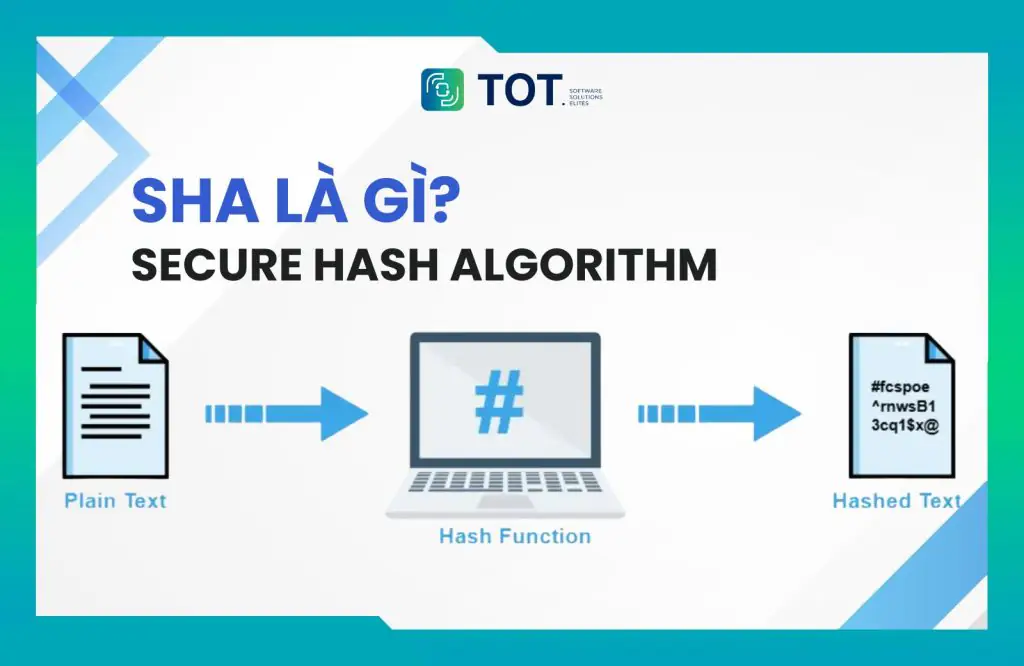
In the digital age, information security is a critical factor for every individual and organization. One of the most common methods for ensuring data integrity is the use of a hashing algorithm – the Secure Hash Algorithm. So what is SHA, how does it work, and why does it matter in the field of security? Let’s explore the details with TOT in this article.
>>> See also:
- What is CSRF? Attack techniques and how to prevent CSRF effectively
- Causes and how to fix security errors when accessing a website
- What is Pentest? What you need to know about penetration testing
- What is PKI? Common Public Key Infrastructure applications
- A free, simple guide to building an online store website with WordPress
What is SHA?
You may have come across the term SHA in technology or information security documentation without fully understanding its role. Before diving into specific versions such as SHA-1 or SHA-2, it is important to grasp two foundational concepts: the hash function and the digital signature. These are the very basis on which SHA is so widely used in modern security systems.
Hash Function
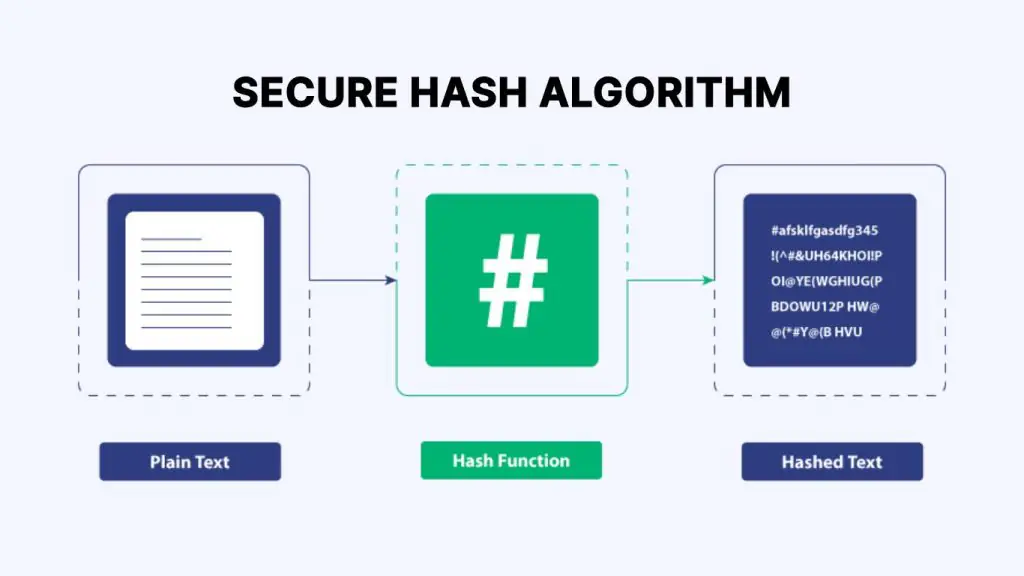
A hash function is an algorithm that converts input data, regardless of its length, into a fixed-length string of characters called a hash. Each different input produces a completely different hash. Notably, a hash function is a one-way algorithm, meaning it cannot be reversed to recover the original data from the hash.
Thanks to this property, hash functions are widely used for:
- Storing and protecting passwords
- Verifying data integrity
- Creating digital signatures
- Securing transactions in blockchain
Among these, SHA-256 is one of the most widely used hashing algorithms today.
Digital Signature
Based on the principle of the hash function, digital signatures are used to authenticate identity and ensure that data has not been altered. A typical example is the SSL/TLS digital certificate, which is used to secure data transmitted over the Internet.
An SSL certificate links a public key to the owner’s identity through asymmetric encryption. A digital signature issued by a Certificate Authority (CA) confirms the validity of the certificate. If the contents of the certificate are changed, the digital signature becomes invalid, which helps detect tampering and ensures a secure connection.
So, What Is SHA?
SHA (Secure Hash Algorithm) is a family of cryptographic hash functions designed to turn input data into a fixed-length string of characters. The core goal of SHA is to ensure data integrity: even the slightest change in the original data produces a completely different hash.
Thanks to this characteristic, SHA is widely applied across many areas, such as:
- Encrypting and storing passwords
- Authenticating data in blockchain
- Creating and verifying digital signatures
- Checking file integrity
- Source code version control (for example, Git)
>>> See also:
- What is website security? Its importance and how to keep your website safe
- A detailed guide to the best way to secure a WordPress website
- Common website security certificates
- Reputable, professional, premium website design services in Da Nang
- Premium, SEO-friendly custom website design services
The Most Common Versions of SHA
To better understand how SHA protects data and ensures information integrity, we need to look at the different versions of this algorithm. Each version of SHA was designed to meet increasingly demanding security requirements, with improvements that address the limitations of the previous version. Below, we will explore the most common versions of SHA, including SHA-1, SHA-2, and SHA-3, to see their evolution and how they are applied in data security today.
SHA-1
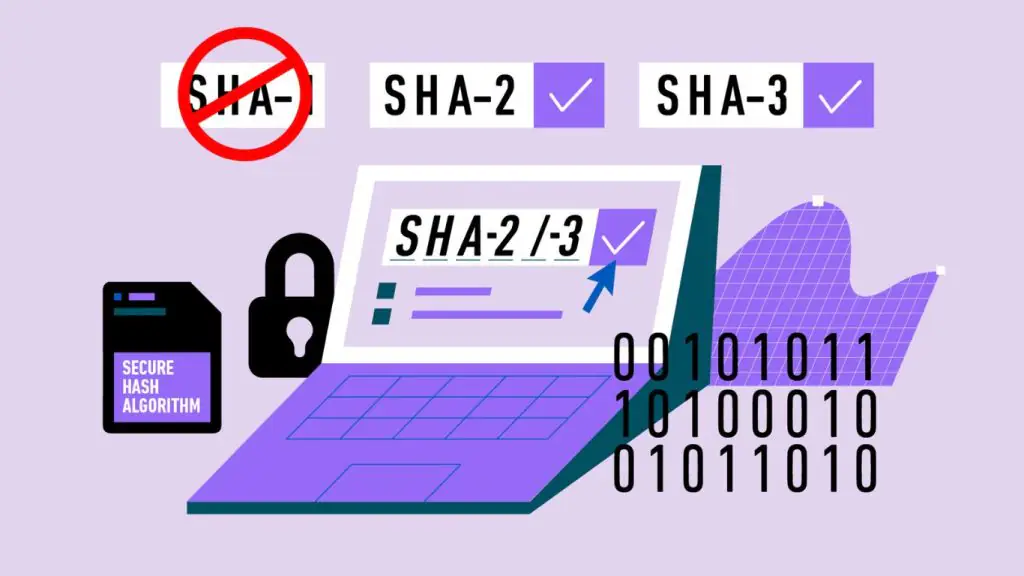
SHA-1 (Secure Hash Algorithm 1) is a hashing algorithm with a 160-bit output, developed in 1993 by the United States National Security Agency (NSA). It was widely used in security applications such as SSL certificates and digital signatures to authenticate and verify data integrity. However, SHA-1 has exposed serious security vulnerabilities, as collision attacks can produce two different pieces of data with the same hash. As a result, SHA-1 is no longer considered secure and has been replaced by SHA-2 in many modern applications. Although it still exists in some legacy systems, SHA-1 is increasingly rarely used due to its potential security risks.
>>> See also:
- What is Threat Intelligence? A new direction in the field of cybersecurity
- E-commerce website design to break through the rankings and boost revenue
- Professional, conversion-optimized SEO-friendly website design services
- Top 10 most professional and reputable website design companies in Vietnam
- Professional, SEO-friendly, high-performing website design services
SHA-2
SHA-2 (Secure Hash Algorithm 2) is a group of hashing algorithms developed as a more secure replacement for SHA-1. SHA-2 includes versions with different hash lengths, such as SHA-224, SHA-256, SHA-384, and SHA-512, with SHA-256 being the most popular. These versions produce hashes that are 224, 256, 384, and 512 bits long respectively, providing a higher level of security than SHA-1.
SHA-2 uses more complex computation methods, ensuring that each different piece of data produces a unique hash that is difficult to attack via collisions. Thanks to its high level of security, SHA-2 is now widely used in many security applications such as SSL certificates, data authentication in blockchain, and password storage. SHA-2 remains the standard choice in many systems and is considered one of the most secure hashing algorithms available today.
>>> See also:
- What is XSS? How to test for and prevent XSS attacks effectively
- What is DNS 1.1.1.1? A quick guide to setting up and changing to DNS 1.1.1.1
- What is DNS 8.8.8.8? An easy guide to changing to DNS 8.8.8.8
- The most professional and reputable custom app design services
SHA-3
SHA-3 (Secure Hash Algorithm 3) is the newest version in the SHA family of hashing algorithms, developed by the U.S. National Institute of Standards and Technology (NIST). Unlike the previous SHA versions (SHA-1 and SHA-2), SHA-3 uses a completely new structure called Keccak, which delivers higher security and resistance to new types of attacks.
SHA-3 not only provides hash lengths similar to SHA-2 (256 bit, 512 bit, etc.), but also offers improvements in performance and flexibility, and can be used for a wide range of security applications including data authentication, digital signatures, and blockchain systems. SHA-3 was designed to complement SHA-2 rather than replace it, and it is currently being researched and applied in fields that require high levels of security.
>>> See also:
- What is vulnerability assessment? A solution for scanning and managing security vulnerabilities
- What is WCAG? How to improve the accessibility of your website
- Get your own custom software development at a good price from a trusted provider
- Website design quote – professional, all-inclusive, and detailed
What Is SHA Used For?
SHA is widely applied in security and data processing systems to ensure the integrity and safety of information. In practice, SHA is commonly used for the following purposes:
- Securing user passwords: SHA is used to hash passwords before they are stored, helping to limit the risk of information leaks even if the database is breached.
- Ensuring data integrity: The SHA algorithm makes it possible to check whether data has been altered during transmission or storage by comparing hashes.
- Digital signatures and SSL/TLS certificates: SHA is a core component in the process of creating digital signatures, helping to authenticate websites and secure HTTPS connections.
- Blockchain and cryptocurrency: Algorithms such as SHA-256 are used to link blocks of data, ensuring the transparency and immutability of the blockchain.
- File integrity checking (checksum): SHA allows hash values to be compared to confirm whether a downloaded file is corrupted or has been tampered with during transfer.
Is SHA Secure?
SHA is still considered secure, but the level of security depends on the version of the algorithm being used. Older algorithms such as SHA-1 have been proven to be no longer strong enough against collision attacks and are no longer recommended for use in security systems.
In contrast, modern versions such as SHA-256 and SHA-3 continue to meet today’s security requirements well. They offer strong collision resistance, are difficult to reverse, and are widely used in SSL/TLS, blockchain, password storage, and many other critical systems.
However, to ensure maximum safety, SHA needs to be implemented correctly. For example, when hashing passwords, SHA should be combined with a salt and other supporting mechanisms rather than used on its own. Choosing the right algorithm and an appropriate implementation plays a decisive role in the effectiveness of SHA’s security.
Practical Applications of SHA
Once we understand SHA, we can explore its practical applications in information security. SHA not only protects passwords but also ensures the integrity of data in blockchain and other security systems. Let’s take a look at these important applications.
- Password hashing applications: SHA is used to hash passwords, protecting user data from security threats. Passwords are not stored directly but are converted into a unique hash. When a user logs in, the system compares the hash of the entered password with the stored one, preventing recovery of the original password and keeping user information safe.
- Applications in digital signatures, blockchain, SSL, and digital certificates: SHA generates hashes for digital signatures, helping to authenticate the sender’s identity and ensure that data has not been altered. In blockchain, SHA links blocks of data, preventing information from being changed. With SSL, SHA protects data as it is transmitted between the server and the user. In digital certificates, SHA helps authenticate the certificate and prevent forgery. Thanks to its ability to generate unique hashes, SHA is a core element in data security and integrity.
- SHA in data authentication and system security: SHA helps authenticate data and secure systems by generating a unique hash, checking integrity by comparing the original and new hashes. In security, SHA stores passwords as hashes, preventing unauthorized access. With its ability to protect data and systems, SHA is an important tool in information security.
>>> See also:
- What is application software? Examples, functions & commonly used programs
- Professional, competitively priced custom software design in Hanoi
- Custom software development in HCMC – professional design across a wide range of platforms

Is SHA an Encryption Method?
SHA is not an encryption method because it does not allow data to be decrypted or the original data to be recovered. Instead, SHA protects data by generating unique, irreversible hashes, ensuring integrity and authentication in many security systems.
Distinguishing Between Hash and Encryption
Hash and encryption (ma hoa) are two important techniques in the field of security, but they have very different purposes and ways of working:
- A hash function is a one-way process that transforms input data into a fixed-length string of characters that cannot be reversed. It is commonly used to verify the integrity of data or to store passwords securely.
- In contrast, encryption is a two-way process in which data is encrypted to protect information from unauthorized access, but can still be decrypted back to its original form using a decryption key. Encryption is often applied in secure communication systems such as email, messaging apps, or data transmission over the Internet.
As we can see, hashing is used to authenticate and verify data, while encryption helps protect and recover data when needed.
>>> See also:
- Distinguishing between Penetration Testing and Vulnerability Assessment
- 25 effective ways to fix website errors that make a site inaccessible
The Differences and the Distinct Role of SHA in Security
SHA (Secure Hash Algorithm) is not an encryption method but a one-way hashing algorithm used to generate a unique representative code for the original data. Unlike encryption – which can be decrypted to recover the original data – SHA cannot be reversed. In security, SHA plays an important role in:
- Checking data integrity
- Protecting user passwords
- Authenticating digital signatures
- Ensuring consistency in blockchain
Thanks to its ability to ensure that data cannot be modified or forged without detection, SHA has become an important foundation for many of today’s security applications.
>>> See also:
- Top 9 free, high-quality, and easiest-to-use app design software
- Top 20 most reputable and highest-quality app design companies in Vietnam
- What is HTTPS? What is the difference between HTTP and HTTPS?
- What is RFI? The role of the request for information in business
Advantages and Disadvantages of the SHA Algorithm
- Advantages: The SHA algorithm offers many notable advantages in information security. First, SHA is fast and efficient to process, making it suitable even for systems handling large volumes of data. Thanks to its one-way nature, SHA is virtually impossible to reverse, helping to protect the original data from unauthorized recovery. At the same time, this algorithm can detect any change in the data, ensuring a very high level of integrity.
- Disadvantages: However, SHA also has some disadvantages, particularly security issues with older versions such as SHA-1. Research has shown that SHA-1 is at risk of collision attacks, allowing bad actors to create two different pieces of data that produce the same hash. For this reason, organizations and developers are advised to move to upgraded versions such as SHA-256 or SHA-3.
>>> See also: What is DDoS? Signs, and how to prevent and handle it effectively
Frequently Asked Questions About SHA
What does SHA stand for?
SHA stands for Secure Hash Algorithm. It is a group of cryptographic algorithms used to convert input data into a fixed-length hash, commonly used to verify data integrity and secure information.
What is SHA-1?
SHA-1 is a hashing algorithm in the SHA family that produces a 160-bit hash. However, SHA-1 is no longer considered secure because security vulnerabilities have been discovered.
What is SHA-2?
SHA-2 (Secure Hash Algorithm 2) is a family of cryptographic hashing algorithms developed by the NSA, used to generate a fixed-length code from input data. SHA-2 includes popular variants such as SHA-224, SHA-256, SHA-384, and SHA-512, supporting data security and information authentication.
What is SHA-256?
SHA-256 is the most popular version in the SHA-2 family. It generates a hash value that is exactly 256 bits long (equivalent to 64 characters). SHA-256 is widely used in many security applications, most notably in Bitcoin’s blockchain technology.
What is the main difference between SHA-1, SHA-256, and SHA-512?
The main difference lies in the length of the hash value and the level of security:
- SHA-1: 160 bit (less secure)
- SHA-256: 256 bit (secure, widely used)
- SHA-512: 512 bit (more secure, often used for systems that require high security)
The longer the hash, the more secure the algorithm, but it also requires more processing resources.
What is SHA-3?
SHA-3 is the newest generation of the secure hash algorithm, selected through a public competition organized by NIST (the U.S. National Institute of Standards and Technology). It has an internal structure that is completely different from SHA-1 and SHA-2, providing a more secure and diverse alternative.
In summary, SHA is a hashing algorithm that helps ensure data integrity and security effectively. Thanks to its one-way nature and resistance to modification, SHA is widely applied in passwords, digital signatures, blockchain, and SSL. Understanding what SHA is will help you apply it correctly and safely in modern security solutions.
Not every business has enough time and expertise to monitor, detect, and fix security issues on its website. TOT offers a comprehensive solution that helps you carry out in-depth security testing, uncover hidden vulnerabilities, and deploy advanced protection measures. We ensure your website runs smoothly and complies with international standards such as OWASP, GDPR, and industry security standards, enhancing your reputation and information security in the digital environment.
TOT is a pioneer on the digital transformation journey. We deliver website design, mobile app, custom software development and artificial intelligence (AI) software with flexible services, optimized to fit your business’s exact needs.
Inspired by the philosophy of “Technology for people”, TOT helps businesses operate more efficiently, elevate the customer experience, and create a lasting impression for their brand.
TopOnTech (TOT) contact information:
📞 Hotline/WhatsApp/Zalo: 0906 712 137
✉️ Email: long.bui@toponseek.com
🏢 Address: 31 Hoang Dieu Street, Xom Chieu Ward, Ho Chi Minh City, Vietnam
>>> See other articles:
- What is AES? The data encryption standard and AES modes of operation
- What is RSA? How RSA encryption works and its use in digital signatures
- What is Brute Force? Causes and how to prevent it effectively
- What is end-to-end encryption (End-to-end encryption)? How does E2EE work?
- What is Cyber Security? A roundup of 9 common types of Cyber Security today
- What is SQL injection? How to prevent and defend against SQL injection attacks effectively