Custom built software has become a strategic investment for businesses seeking long-term efficiency, flexibility, and competitive differentiation. Unlike generic pre-built tools, custom solutions are tailored to match specific workflows, industry requirements, and growth plans. The TOT approach enables organizations to optimize operations, strengthen security, and integrate seamlessly with existing systems. As digital transformation accelerates, custom software continues to offer unmatched value for companies aiming to scale sustainably and innovate faster.
>>> Explore more:
- Top 15 Software Outsourcing Company in Vietnam (2026 Update)
- Top 10 IT Outsourcing Companies in Vietnam [Most Updated 2026]
- Top 10 Mobile App Design Agency in 2026
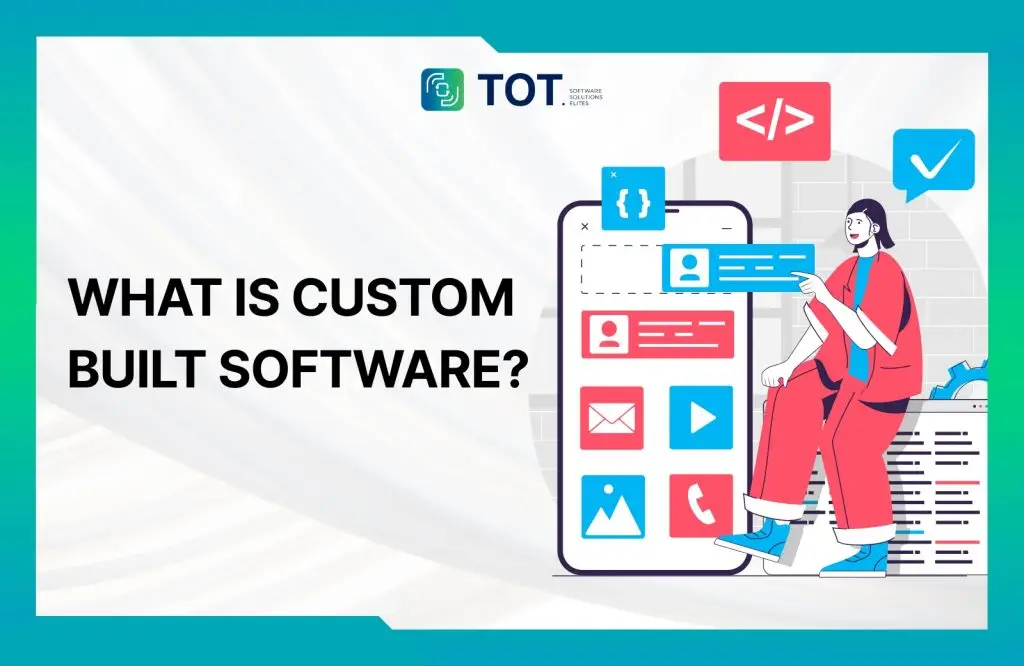
What Is Custom Built Software?
Custom-built software (also known as bespoke or tailor-made software) is software specifically designed to meet the unique needs, workflows, and long-term goals of a particular business. Unlike off-the-shelf tools, which offer generic features for mass audiences, custom development allows organizations to define every component precisely: from user flows and integrations to security controls and automation logic.
This type of software is engineered using modern development methodologies (Agile, DevOps, CI/CD) and can be built for web, mobile, desktop, or multi-platform ecosystems. Because it aligns directly with business operations rather than forcing teams to adapt to predefined features, custom-built software provides a stronger foundation for digital transformation, operational efficiency, and scalable growth.
Why Do Businesses Choose Custom Built Software?
Full customization and scalability
- Businesses can define every feature, workflow, and integration.
- Systems scale seamlessly as user demands, data volumes, or business processes evolve.
- Ideal for industries with specialized operations such as logistics, healthcare, fintech, construction, or manufacturing.
Better integration with existing systems
- Custom solutions integrate smoothly with CRM, ERP, HRM, IoT platforms, payment gateways, and legacy systems.
- Enables unified data flow, reducing errors and eliminating manual workflows.
- Helps businesses avoid compatibility limitations often found in pre-built tools.
Enhanced data security and compliance
- Security layers can be tailored to industry standards ISO 27001, HIPAA, GDPR, SOC 2, PCI-DSS.
- Businesses gain full control over data architecture, access permissions, and encryption methods.
- Reduces vulnerability caused by shared vendor infrastructure.
Long-term cost efficiency and reduced vendor lock-in
- No recurring subscription fees tied to user seats or premium modules.
- Organizations retain full ownership of source code and architecture.
- Avoids dependency on external vendors whose pricing or policies may change.
Improved user experience and productivity
- UX/UI is designed around real user behavior and workflow needs.
- Custom automation reduces repetitive tasks and speeds up processes.
- Enhances employee satisfaction, lowers training costs, and boosts adoption rates.
Unique competitive advantage
- Businesses can build proprietary features that competitors cannot match.
- Custom software becomes a strategic asset, improving innovation and market differentiation.
- Enables quick adaptation to emerging technologies such as AI, machine learning, RPA, and predictive analytics.
>>> Read more:
- Top 12 Web Design Agencies in Vietnam (2026) – Trusted & Professional
- Top 10 Web Agency Offshore Companies for Global Businesses (2026)
- Top 15 Best Web Design Companies in Ho Chi Minh City (2026)

Custom Built Software vs Off-the-Shelf Solutions
| Criteria | Custom Built Software | Off-the-Shelf Software |
| Definition | Tailor-made for a specific business, built to match exact processes and long-term goals. | Ready-made product designed for broad market usage with predefined features. |
| Flexibility | Highly flexible; every feature and workflow can be customized or expanded. | Limited flexibility; businesses must adapt their processes to the product’s structure. |
| Cost | Higher initial investment but lower long-term cost due to ownership and no licensing fees. | Lower upfront cost but higher ongoing subscription, upgrade, and user-license fees. |
| Security | Custom security protocols, private architecture, and compliance-level controls. | Shared architecture with standard security; vulnerable to mass-targeted attacks. |
| Scalability | Scales smoothly as teams, operations, and data volumes grow. | Scaling often requires premium tiers or additional licenses, which can be costly. |
Common Types of Custom Built Software
Custom-built software can be categorized based on its business function or the industry it serves. These solutions are tailored to meet specific workflows, compliance requirements, and scalability needs.
By business function
These software types are built to improve core business activities, enhance workflow efficiency, and support data-driven operations across departments.
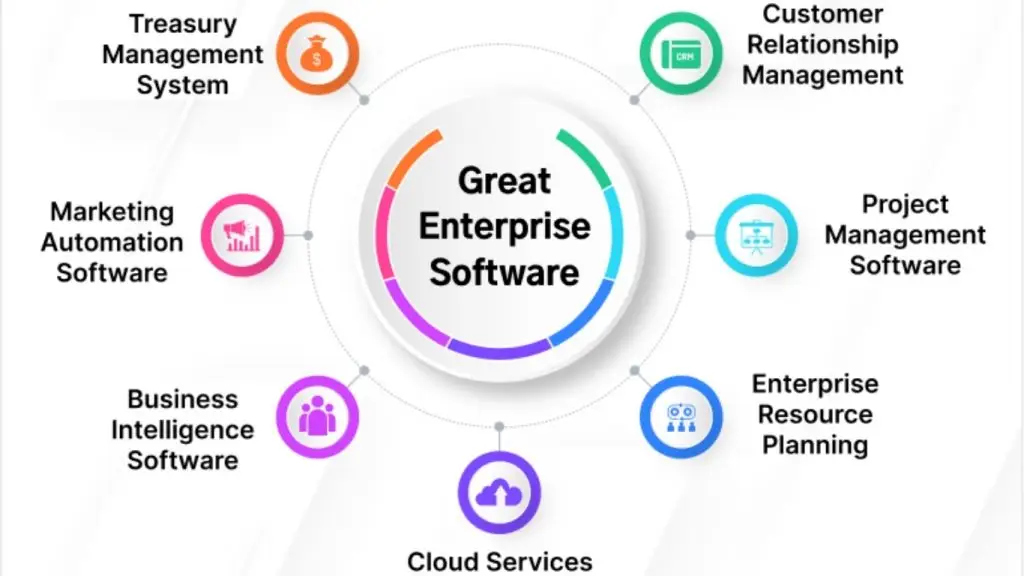
- CRM systems
CRM platforms help businesses manage leads, customer interactions, marketing activities, and sales pipelines. Custom CRMs are ideal when standard tools cannot support complex workflows or multi-channel operations. They improve retention, enable personalized engagement, and centralize customer data for smarter decisions.
- ERP software
ERP software integrates finance, procurement, inventory, HR, and supply chain operations into a unified system. Custom ERP is beneficial for enterprises with unique processes or compliance needs, as it eliminates manual work, increases visibility, and ensures streamlined multi-department collaboration.
- Project management tools
Custom-built project management systems support planning, resource allocation, progress tracking, and cost forecasting. They are particularly valuable for enterprises managing large-scale operations across teams or geographies. Tailored systems offer adaptive workflows, automation, and real-time reporting that generic PM tools often cannot provide.
- HR & payroll solutions
These platforms automate employee onboarding, time tracking, performance evaluation, and payroll processing. Large organizations often require unique approval flows, multi-branch payroll control, and compliance modules — making custom HRMS worth investing in for accuracy, scalability, and workforce insight.
- E-commerce platforms
Custom e-commerce systems are built around catalog management, checkout flows, payment gateways, loyalty programs, and order fulfillment. They benefit companies with complex pricing, multi-warehouse operations, or omnichannel strategies. Unlike SaaS platforms, custom solutions allow complete control over UX, integration, and scalability.
- Mobile & web applications
Enterprises develop custom mobile/web apps to enable on-the-go workflows, internal collaboration, and enhanced customer experience. These may include booking apps, sales management dashboards, field-service mobility tools, or self-service customer portals. Custom apps are highly scalable and adaptable to future upgrades.
>>> Read more:
- Software Development Methodologies: 15 Key Types, Benefits, and Comparison
- What Is Custom Enterprise Software Development? Full Guide 2026
- Custom Software Development for all needs: great price, professional process
By industry
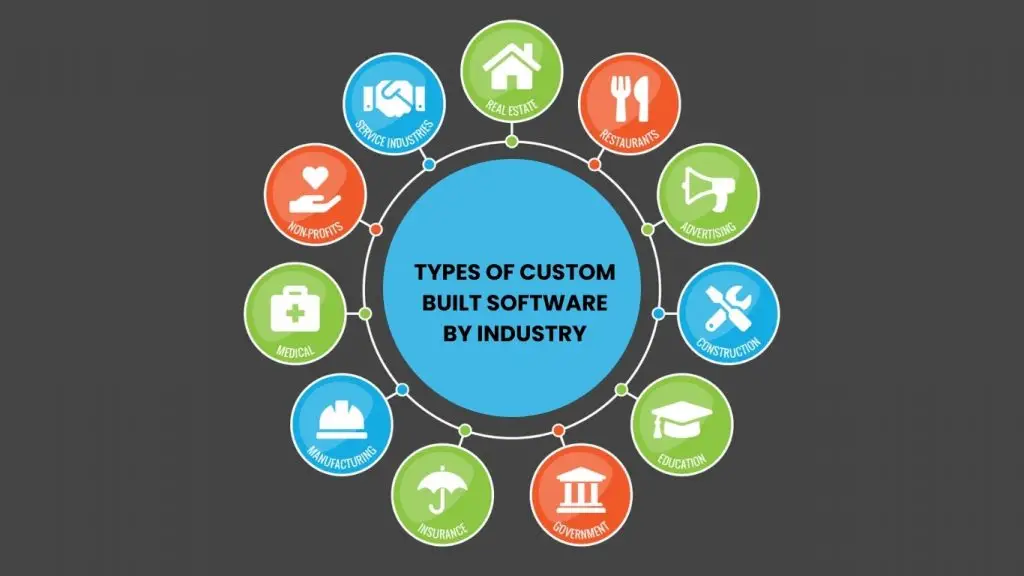
Certain sectors require custom software due to regulatory demands, security requirements, or specific operating models.
- Healthcare
Custom healthcare software supports EMR/EHR systems, telemedicine, appointment scheduling, and insurance verification. It ensures HIPAA-level security, patient data privacy, and seamless care coordination.
- Education
Learning Management Systems (LMS), student portals, virtual classroom tools, and assessment platforms are commonly designed for educational institutions. Custom solutions allow academic personalization, multi-campus scalability, and advanced analytics for student performance.
- Finance & banking
This sector requires high-security software for fraud detection, digital payments, risk scoring, credit monitoring, and investment automation. Custom platforms ensure compliance with industry standards such as PCI-DSS and IFRS while providing real-time financial insights.
- Logistics
Custom logistics systems manage fleet routing, real-time tracking, warehouse inventory, carrier allocation, and delivery optimization. These solutions improve supply chain visibility, reduce delays, and cut operational costs.
- Manufacturing
Manufacturing execution systems (MES), IoT-powered factory automation, and quality control tools streamline production workflows. Custom software supports predictive maintenance, equipment optimization, and seamless integration with ERP and SCADA systems.
- Telecommunications
Telecom companies use custom billing platforms, network monitoring software, VoIP systems, and customer self-care portals. Tailored solutions enable large-scale data management, high uptime, and automation of service provisioning.
>>> Explore more:
- Website Design Cost for a Transparent Full-Package Quote in 2026
- Create a Free Online Store Website: A Quick, Detailed, and Effective Guide
- Restaurant Website Design — Professional, Modern 2026
The Custom Software Development Process
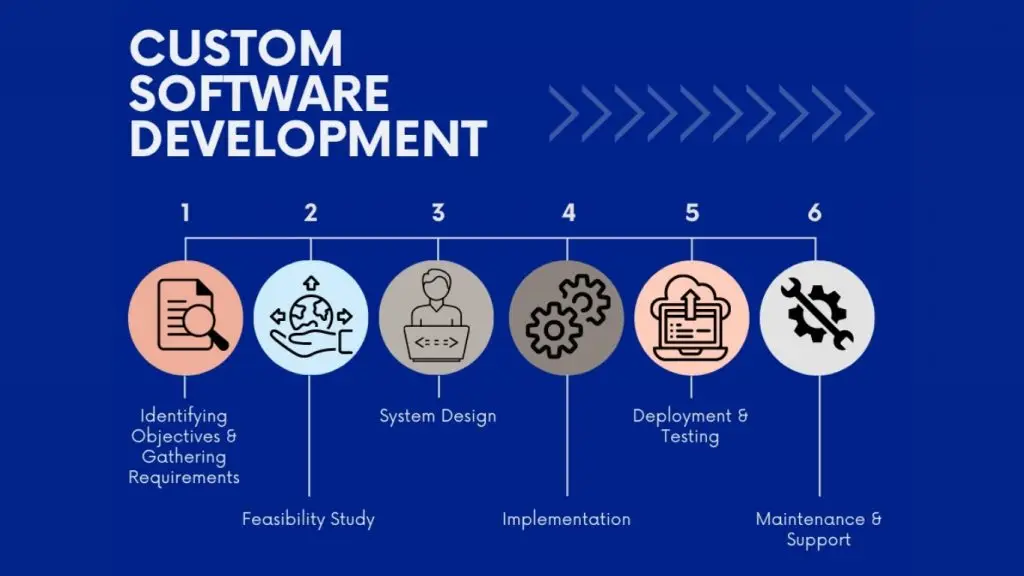
Building custom enterprise software is a structured, multi-stage process designed to ensure that the final product meets business goals, scales sustainably, and integrates smoothly into existing workflows. While every project may vary, most follow a similar end-to-end lifecycle:
- Step 1: Requirements analysis & goal definition
The development team gathers business needs, stakeholder goals, workflow challenges, and technical constraints. This phase may include competitor benchmarking, user interviews, and feasibility validation. A detailed Software Requirements Specification (SRS) is produced, outlining features, integrations, deadlines, and success metrics.
- Step 2: UI/UX design & architecture planning
Wireframes, user flows, and high-fidelity prototypes are developed to visualize the solution. The system architecture (cloud/on-premise, microservices, API structure) is defined to ensure high scalability and security. A well-designed UX reduces adoption resistance and improves productivity across enterprise departments.
- Step 3: Software development (coding & versioning)
Developers build the software using selected programming languages, frameworks, and databases. Agile or DevOps practices are commonly applied to enable iterative releases, CI/CD, and continuous integration of features. Documentation and version control systems ensure code maintainability for long-term growth.
- Step 4: Testing & quality assurance
Multiple QA cycles, unit, integration, UI, performance, and security testing are carried out before deployment. Automated testing frameworks help maintain reliability, especially for large-scale enterprise platforms. The goal is to resolve bugs early and achieve maximum system stability.
- Step 5: Deployment & user training
The final product is deployed into the live environment using secure release pipelines. Staff training, onboarding documentation, and admin guides are provided to ensure smooth adoption. Enterprises often roll out software in phases to minimize risk and collect quick feedback.
- Step 6: Maintenance, scaling & continuous improvement
After launch, the software is continuously optimized through patches, feature updates, performance upgrades, and security improvements. Enterprises often scale systems by adding new modules, AI analytics, workflow automation, or API integrations to align with business expansion.
>>> Read more:
- Mobile App Design Development: The Complete Guide for Designers
- Mobile App Development Project Plan: Guide to Build a Successful App in 2026
- How Much Does E-Commerce Mobile App Development Cost in 2026?
Real-World Examples of Custom Built Software
Custom-built software has enabled some of the world’s most successful companies to scale exponentially, personalize user experiences, and automate complex workflows. Below are real examples of enterprises that leveraged tailored software to gain a competitive edge:
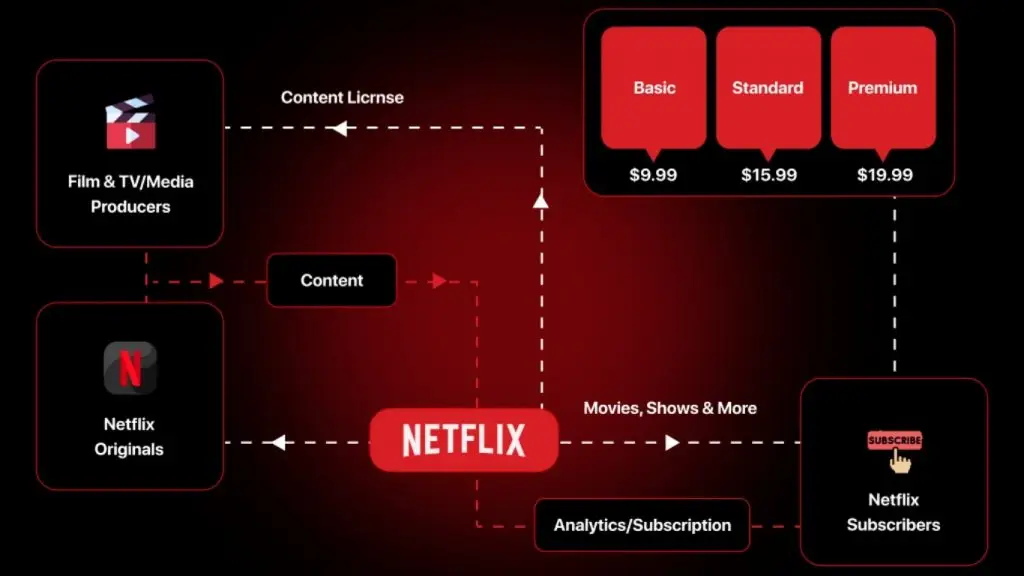
- Netflix:
Netflix’s recommendation system analyzes massive user behavior data such as watch time, genre preferences, and device history to serve personalized content suggestions. This tailored solution keeps users engaged and significantly reduces churn, proving how custom AI-driven software can boost retention and viewing time.
- Amazon:
Amazon’s warehouse fulfillment and delivery management rely heavily on proprietary systems. Custom route optimization, automated picking, smart stocking algorithms, and real-time inventory tracking help Amazon execute millions of orders seamlessly. This software is tuned to Amazon’s scale, enabling fast delivery and high operational efficiency.
- Airbnb:
Airbnb built a one-of-a-kind platform for listing verification, secure payments, host–guest matching, and dynamic pricing based on seasonality and demand. Its custom architecture allowed Airbnb to handle trust, identity validation, and real-time availability — challenges that off-the-shelf systems couldn’t solve.
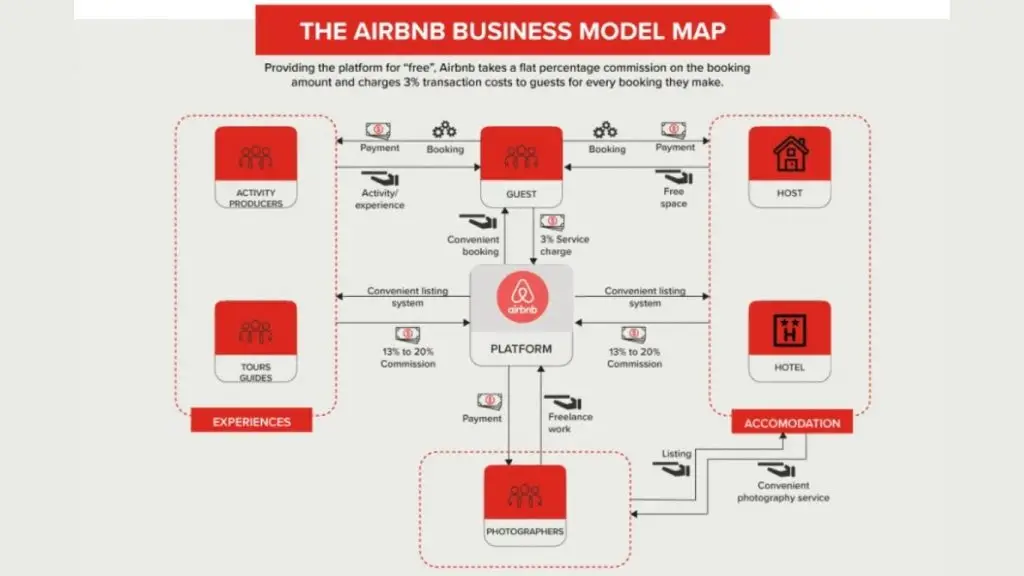
The success of the above examples lies in the precision fit between the developed solution and the organization’s real operational needs. Key value drivers include:
- Built-for-purpose architecture, rather than adapting business processes to generic software.
- Scalable performance, accommodating growing users, data, and transactions.
- Seamless integration with internal tools, analytics systems, and third-party APIs.
- Enhanced user experience, personalized to customer behavior and industry demands.
- Faster innovation cycles that enable new features and competitive differentiation.
In simple terms, customization works because it eliminates limitations, rather than working around them. Companies gain control, flexibility, and long-term efficiency that pre-built tools cannot provide.
Challenges and Risks of Developing Custom Software
While custom software brings unmatched flexibility and long-term ROI, the development journey comes with specific challenges that organizations must evaluate carefully. Understanding these risks early helps businesses prepare better and maximize the value of customization.
- Longer development timelines
Unlike off-the-shelf products, custom software is built entirely from scratch, from features to integrations. This means planning, design, coding, and QA cycles take longer. Projects may span several months or even years, depending on complexity, scalability requirements, and the speed of stakeholder decision-making.
Businesses must be patient and have clear expectations regarding rollout schedules to avoid pressure on development teams or premature launches.
- Higher upfront investment
Custom solutions require more resources, expertise, and development hours. As a result, initial costs are higher compared to ready-made software. Over time, custom software often proves more cost-efficient by eliminating subscription fees, reducing workflow inefficiencies, and offering ownership of the product with no vendor lock-in.
- Need for reliable development partners
A custom software project is only as strong as the team behind it. Choosing an inexperienced vendor can lead to delayed delivery, technical debt, or unstable architecture. Evaluate vendors based on technical expertise, industry portfolio, security compliance, and long-term support capabilities.
- Maintenance & upgrade responsibilities
Once deployed, the organization must continuously maintain and optimize the solution. This includes patching, scaling performance, fixing bugs, and updating integration APIs. Systems may become outdated, vulnerable to security risks, or incompatible with new operational tools.
>>> Read more: What is AES? Overview of the Advanced Encryption Standard

- Risk mitigation strategies
| Strategy | Benefit |
| MVP development | Validates product-market fit early and prevents over-building. |
| Agile methodology | Speeds up delivery, improves flexibility, and allows iterative feedback. |
| Clear documentation | Ensures smooth onboarding, maintenance, and future scalability. |
| Regular stakeholder reviews | Keeps product aligned with business goals. |
How to Choose the Right Custom Software Development Partner
Choosing the right partner for custom software outsourcing can make or break your project. Below are key criteria and common red flags to guide your selection:
Key Selection Criteria:
- Proven portfolio and relevant experience: Review past projects similar in scope or industry to yours. A strong case history shows the partner truly understands the challenges and can deliver solutions reliably.
- Technical expertise and the right tech stack: Ensure the team supports the technologies and frameworks you need (e.g., modern web frameworks, mobile platforms, integrations). This is essential for scalability and maintainability.
- Transparent communication & adherence to Agile practices: Regular updates, clear accountability, and collaborative workflows help avoid misunderstandings and ensure that the development aligns with your business goals.
- Post-launch support & maintenance policy: A reliable partner provides ongoing support, updates, bug fixes, and scaling options that are essential, especially for evolving enterprise-level software.
TOT is an experienced custom software development company in Vietnam that offers outsourcing services, combining technical know-how, flexible engagement models, and transparent communication. TOT covers everything from web design and mobile development to enterprise solutions, which makes them well-suited if you’re looking to outsource custom software projects and want a partner that can grow with your needs.
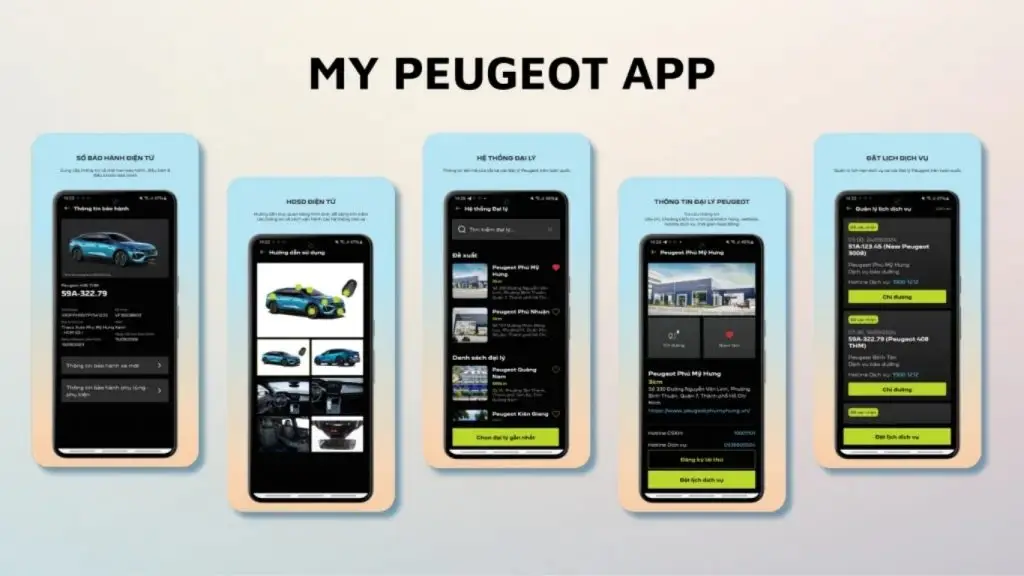
TOT partnered with Peugeot Vietnam to reimagine the My Peugeot App — a mobile solution for vehicle discovery, test-drive booking, maintenance scheduling, and ownership management. Over a 4-month development cycle, TOT delivered a full redesign using React Native (cross-platform), .NET Core back-end, and Next.js CMS integration. The project addressed:
- UI/UX inconsistencies
- Lack of service-booking features
- Outdated performance
As a result, the updated app provides:
- Smooth vehicle browsing
- Online booking for test drives and maintenance
- A real-time showroom locator
- Synchronized data
This overhaul significantly improved user satisfaction, operational efficiency, and customer engagement across the brand.
>>> See more:
- Custom Software Development in Ho Chi Minh City – Professional, Multi-Platform Solutions
- Custom Software Development in Hanoi – Professional and Affordable Solutions
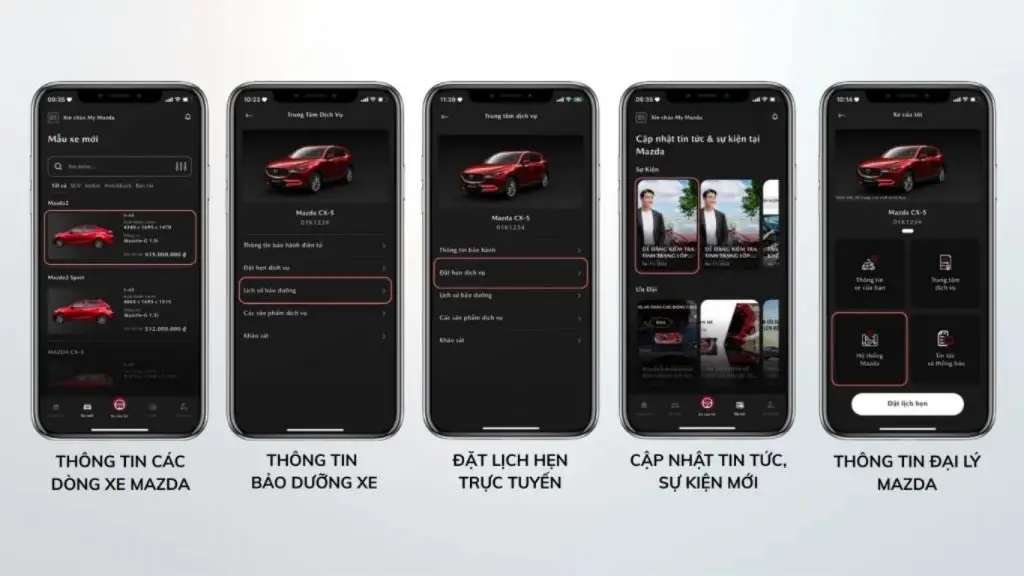
TOT developed the My Mazda App as a comprehensive digital companion for Mazda owners in Vietnam. The app streamlines the customer journey by enabling users to explore vehicle models, book test drives, schedule maintenance, and access service records in one place. TOT’s integrated backend solutions also ensure real-time synchronization with Mazda’s internal systems, improving operational efficiency for both users and service teams.
Frequently Asked Questions (FAQs)
What is the cost of developing custom-built software?
Custom software development costs vary widely depending on scope, features, complexity, technology stack, and development model. Small to mid-sized applications may require a modest investment, while enterprise-grade systems require a significantly larger budget. The total cost also increases when advanced integrations, security layers, or scalability requirements are involved.
How long does it take to build a custom solution?
The development timeline depends on the project’s size and complexity. Simple software can take a few months, while large-scale enterprise systems may require a year or more for full deployment. Stages like requirement analysis, UI/UX design, development, testing, and maintenance each contribute to the overall duration.
Can it integrate with existing business systems?
Yes. Custom software is specifically designed to connect with internal systems such as ERPs, CRMs, HR tools, payment gateways, or industry-specific platforms. Integration enables seamless data flow, eliminates manual processes, and improves operational efficiency. However, proper API planning and data mapping are essential for smooth implementation.
Is custom software more secure than off-the-shelf?
In many cases, yes. Because custom solutions are built privately—not mass-distributed—they are less vulnerable to common exploit patterns. Developers can implement tailored security protocols, encryption methods, and compliance frameworks to protect sensitive information. That said, ongoing updates and maintenance are crucial to ensure long-term security.
Investing in custom build software enables businesses to create solutions tailored to their unique processes, goals, and customer needs. By leveraging bespoke development, organizations can enhance efficiency, improve user experience, and gain a competitive edge in their industry. While the process may require careful planning, reliable development partners, and ongoing maintenance, the long-term benefits far outweigh the initial investment. Choosing the right approach ensures scalability, security, and alignment with business objectives. For companies seeking expert guidance, partnering with a trusted provider like TOT can make your custom software vision a reality.
TOT is a pioneer in the digital transformation journey. We deliver website design, mobile app development, and custom software solutions with flexible services tailored to each business’s exact needs.
Inspired by the philosophy of “Technology for People,” TOT empowers businesses to operate more efficiently, elevate customer experiences, and build a lasting brand impression.
TopOnTech (TOT) Contact Information:
📞 Hotline/WhatsApp/Zalo: (+84) 906 712 137
✉️ Email: long.bui@toponseek.com
🏢 Address: 31 Hoang Dieu Street, Ward 12, District 4, Ho Chi Minh City, Vietnam